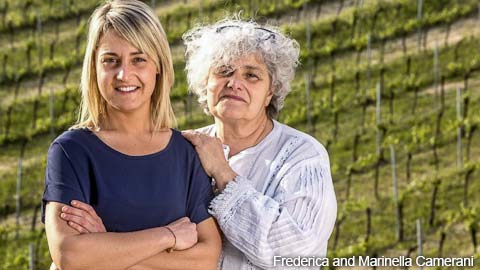
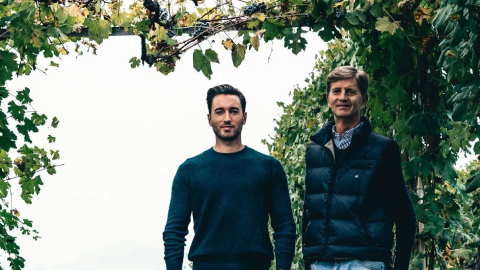
This estate was founded by Marinella Camerani, the owner of Corte Sant`Alda, a nearby biodynamic Valpolicella estate. Adalia was set up so that drinkers with shallower pockets could get a taste of the best the region can offer. Adalia is run by Marinella`s daughter on organic lines and the vines are trained in traditional pergola formation, so yields are slightly higher than at Corte Sant`Alda, keeping prices down without scarificing real quality. The estate takes its name from adalia bipunctata, an expert aphid-hunting ladybird that thrives in this area and helps the organic viticulture.
Italy
Italy
Italy is a large country filled with vines - up to nine hundred different varieties according to some sources. So we won't attempt to try to unravel its mysteries or complexities in a couple of paragraphs here, sign up for one of our courses for that! Suffice to say that the hottest part of Italy is often in the north, and that bits of the country you've never heard of make some of the best wines.
You may think Italians are an argumentative bunch only concerned with finding a way round the rules and I couldn't possibly comment, but it's the other half who have spent months meticulously drafting and redrafting those rules in the first place, and firmly believe they're the most important part of life. In every respect Italy is infuriating and seductive, so watch out, it may become a bigger part of your life than you intended!
- Argentiera
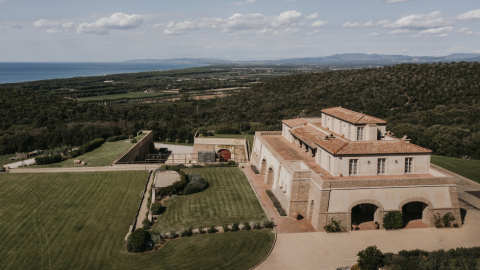
The small Tuscan coastline appellation of Bolgheri has had a disproportionate impact on the modern Italian wine scene. Its success has been in exploiting the remarkable affinity between Bordeaux grape varieties and Tuscan soils. Argentiera were founded here in 1999, and have since become one of Bolgheri’s reference estates. The Argentiera estate comprises 153 hectares (85 planted to vines) at the very southern end of the appellation, and which are among the highest vineyards of any Bolgheri estate.
- Argiano
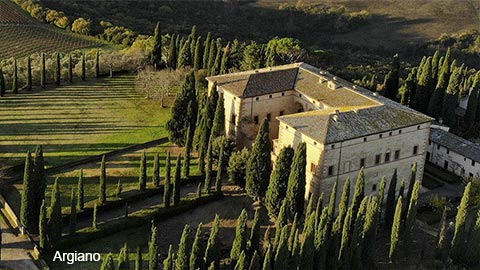
Argiano is many people’s touchstone Brunello. Tucked away in the far south-western limits of Brunello production, away from the main clusters of estates, the late Renaissance hilltop villa of Argiano looks down on its vineyards. Monte Amiata hulks nearby. It’s a spectacular site, with a long history of winemaking – there have been vineyards on this hill for at least 500 years.
- Bartolo Mascarello
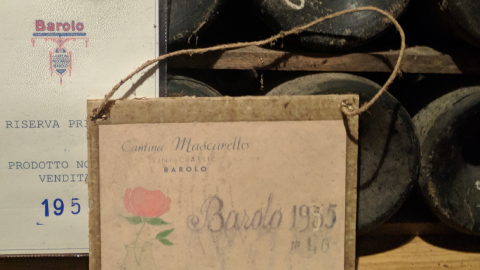
Cantina Bartolo Mascarello is one of Barolo’s most revered domaines. It was founded in 1919 by Giulio Mascarello, who had been trained by his father Bartolomeo, the cellarmaster at the Cantina Sociale di Barolo. In a novel move at the time, Giulio borrowed money and started his own winery. In those days it was still relatively easy to acquire great parcels in great vineyards. Giulio was followed by his son Bartolo, who had spent the war years fighting the Germans as a partisan in the Langhe hills.
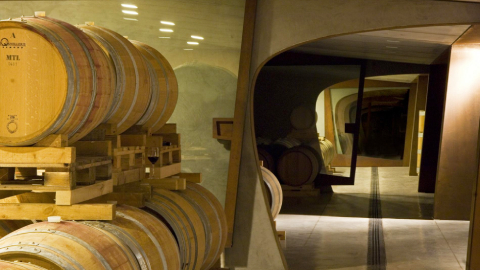
- Borgo del TiglioNicola Manferrari trained as a pharmacist, but he took over the estate in 1981 when his father unexpectedly passed away. It had always been well known locally that the family had the best vineyards in the area; Nicola`s grandfather sold the family wines very easily. Now he dreamed of making world-class white wines that people would age. He has always been very focussed on the letting the quality of terroir speak; from the early days, he avoided anything that might dilute terroir impact, such as fertilisers or irrigation.
- Borgolucce
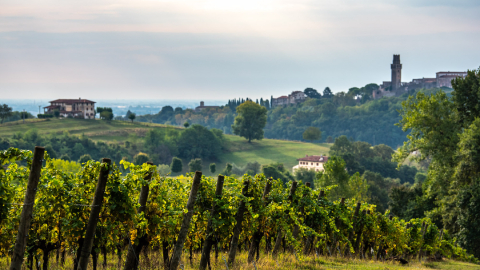
The rolling hills of Conegliano Valdobiaddene are the heartland, the Classico if you will of Prosecco production. But it isn`t just a monoculture. there are south-facing vineyards interspersed with forests on the northern slopes and meadows and fields in between. Together with the best of integrated pest management systems and no systemic use of herbicides or pesticides the beuaty and care taken over the region has resulted in it`s becoming a UNESCO World Heritage site.
- Bruna Grimaldi
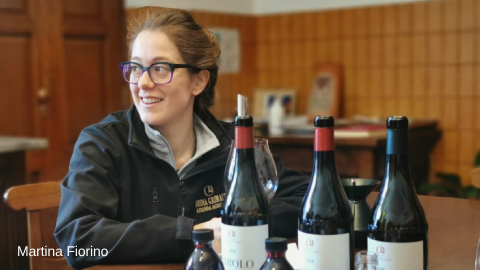
When we first visited Bruna Grimaldi in Grinzane Cavour, we felt we had met a young winemaker of real promise. Simone was doing everything you would want to see. all the vineyards converted to organics in 2014; the new but traditionally appointed winery; modern training, all married to a respect for the traditional culture and wines of Piedmont which comes from being the fourth generation farming these hills.
- Bruno Giacosa
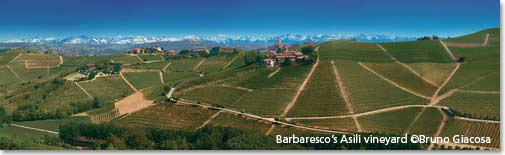
If Bruno Giacosa is such a great winemaker, why has he only made wine in 16 out of the last 20 vintages? Honesty and integrity are vital elements of quality, and Bruno believed that in 91, 92, 94 and 06 he didn`t have the quality he needed to produce exceptional wines and so he declassified his single vineyard `crus` entirely. That takes both courage and integrity, and demonstrates why Bruno is taken so seriously. Now in his early eighties, this meticulous vigneron has worked in his family`s vineyards and cellars for almost seventy years.
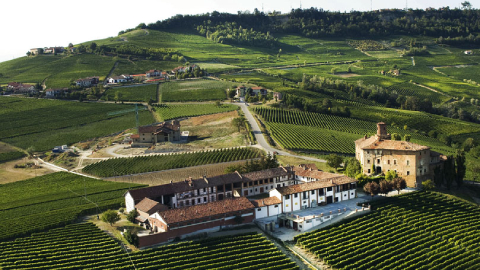
- CabuttoThe Cabutto family bought the La Volta farm back in 1920. Nestled by La Volta castle (it`s known as the `abode of the devil` due to some particularly wild legends) the winery overlooks the town of Barolo. For an estate of its age and size - they control around 20 hectares of vines - it is hardly known in the UK at all. They work rigorously in the vineyards and while they follow a very traditional path, the cellars are bang up to date. Tasting here, you can see why these wines became so highly prized by other winemakers. (EE 10/07/19)
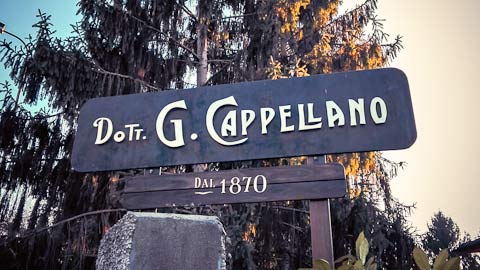
- Cappellano
Dott. G. Cappellano is a very singular company. They invented the medicalisation of Barolo with the Chinato and members of the family spent time in north Africa, especially Eritrea and Tunisia researching phylloxera-resistant vines. Teobaldo also began the custom that visiting critics should not score the wines, though they can write as expansive tasting notes as they like. His son and current incumbent Augusto continues that proud tradition. Ignore it and you`ll never visit again.
- Castello Romitorio
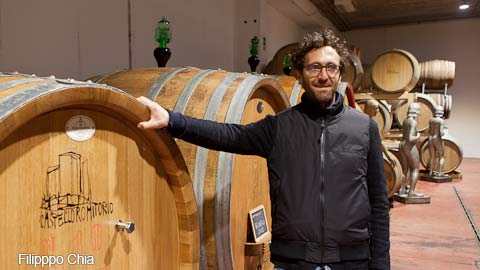
Castello Romitorio went from Roman fort to monastery to stately home to fort again, all by the Rinascimento. Subsequently it led a shabby life and was completely abandoned after the Second World War. It was purchased, and an attempt at restoration begun in the 1970s, but in 1984 the Chia family bought it. Sandro - a famous artist - was the instigator who first rejuvenated the estate and now his son Filippo has for some time been working to realise the full potential. 2015 is perhaps the year that shows these great vineyards at their best.