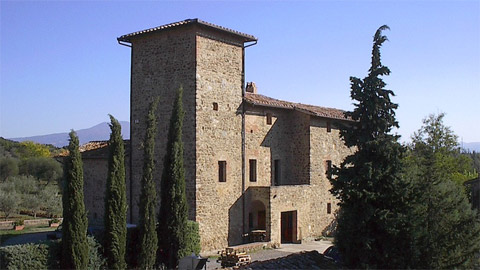
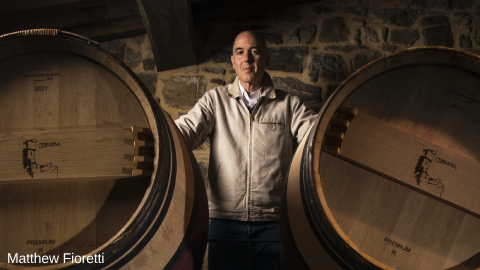
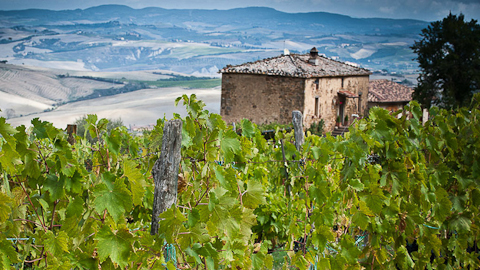
Cerbaiona is a name to conjure with in Montalcino. Tucked away in the eastern edge of the commune, this small, favoured estate has long produced some of the most sought-after of any Brunello, from only 3 hectares of old vines. It has been well-established at the head of the pack since the 1980s, but has a much longer history. There have been highly regarded vineyards on this site for hundreds of years - the name ‘Cerbaiona’ was known and sought after before anyone ever asked for a ‘Brunello’.
Italy
Italy
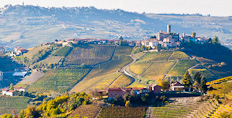
Italy is a large country filled with vines - up to nine hundred different varieties according to some sources. So we won't attempt to try to unravel its mysteries or complexities in a couple of paragraphs here, sign up for one of our courses for that! Suffice to say that the hottest part of Italy is often in the north, and that bits of the country you've never heard of make some of the best wines.
You may think Italians are an argumentative bunch only concerned with finding a way round the rules and I couldn't possibly comment, but it's the other half who have spent months meticulously drafting and redrafting those rules in the first place, and firmly believe they're the most important part of life. In every respect Italy is infuriating and seductive, so watch out, it may become a bigger part of your life than you intended!
- Corte Sant`Alda
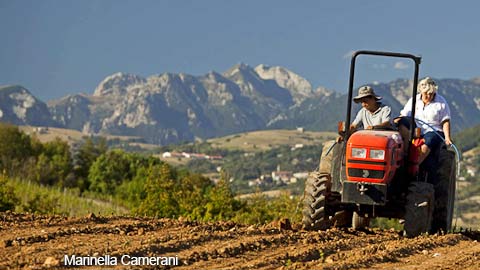
Marinella Camerani taught herself grape growing and winemaking from scratch, in vineyards that came with a weekend home her father had acquired. Through decades of hard work, traditional winemaking methods and an unwavering commitment to biodynamic viticulture, she has brought Corte Sant`Alda from deep obscurity to recognition as one the premier Valpolicella producers. Honouring her dedication, the Italian food and wine guide Gambero Rosso named her Italian Winemaker of the Year in 2025.
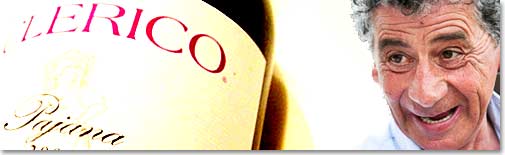
- Domenico ClericoThe inimitable Domenico Clerico is perhaps not the first master Piedmont winemaker we feature that spring to mind at a moment`s notice. Domenico is a man who would probably have a short career in retail but he`d go down a storm on a City trading floor. One visitor who claimed to be something of an expert was given three samples at the start of his interview. After discussing the differences in the three terroirs apparent in the samples, Clerico showed him the identical bottles they had come from and terminated the appointment.
- Elena Fucci
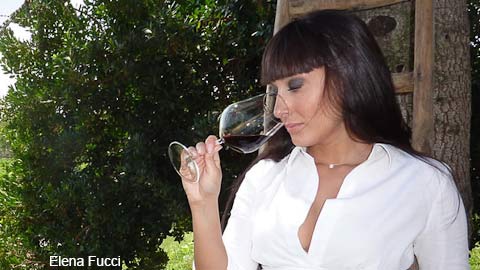
Basilicata is an almost unknown region from the south of Italy, itself defended by an inhospitable looking Vulcan landscape. It is an agricultural area and though small spans the country with connection to both Ionian and Tyrrhenian seas. Its charms are understated to say the least and for us the stand out star is the DOCG region of Aglianico del Vulture. It is an area of high altitude (600 mts in this case) and undisturbed vines. And unlike Taurasi up the road in Campania it has to be a single varietal wine; it is all Aglianico.
- Elvio Cogno
It is Novello’s premier estate, and a rising star in Barolo - it also sits smack in the middle of the great Ravera cru. Elvio Cogno founded his eponymous winery when he already had most of a lifetime’s experience making Barolo behind him; these days, the winery is very skilfully managed by his son-in-law Valter Fissore. Cascina Nuova is a glorious and approachable wine made from a selection of the youngest vines in Ravera; Barolo Ravera is the winery’s calling card, made from some particularly old vines.
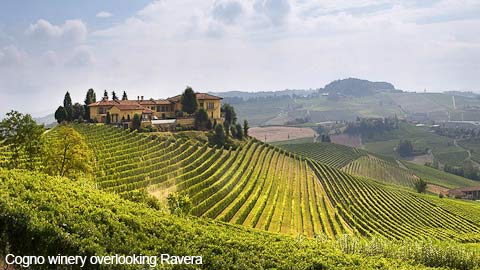
- Fratelli Alessandria
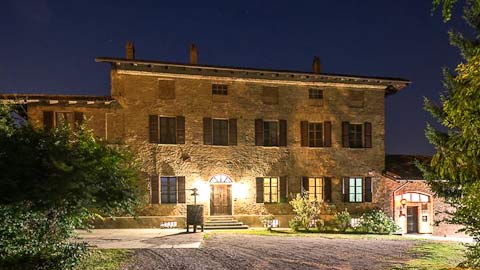
Thanks to the Alessandria family, the once under-the-radar village of Verduno has been firmly put on the map. While the family has been making fine Barolos here for five generations, quality has never been higher than now; under the stewardship of current incumbent Vittore Alessandria, the estate`s profile has soared. Vittore can seem like a pretty serious fellow, till he breaks into a huge smile and stops trying to hide the fact he loves what he`s doing. And he`s got reason to be pleased.
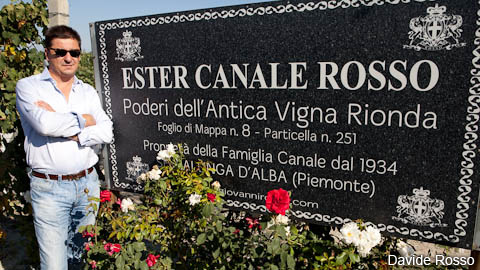
- Giovanni RossoSerralunga is the most south-easterly commune of Barolo, and Giovanni Rosso think of themselves as a Serralunga producer as much as a Barolo producer. The family has owned vineyards here since the 1890s, but only bottled under their own label since 1995. They still aren`t as well known as they deserve to be - as Jamie Goode writes, `While this isn`t one of the best known Barolo estates, it is one of the best`. Ambitious and upcoming he may be, but Davide Rosso, who took over in 2001, is no Barolo modernist. He works organically whenever possible.
- Giuseppe Mascarello
The one word to sum up Mascarello would be tradition. Established in 1881, it appears very little has moved on, both with the wines and the family. All the work is done in the vineyards with meticulous attention to detail and in the winery their philosophy has changed little over the last century. There is no chance of them following trends for new French oak or rotary fermenters; they continue to produce wine the only way they know how. In the winery (an old ice house) all the automated stainless steel tanks say ‘emergencia’ on them and even this is ignored!

- Il Poggione
Il Poggione is one of the founding estates of the Brunello di Montalcino Consortium and has been selling wine since the early 1900s. The estate is still owned by the family, with Leopoldo and Livia Franceschi in charge these days. The day to day running is under the control of Fabrizio Bindocci, who has worked there since 1976 and is the current president of the Consortium.
- Inama
As my colleague Zoë said once about Stefano Inama- `well, he puts the suave into Soave!` But there is much more to Stefano than the role of charmer. Much happier as farmer, he manages the family domaine with meticulous farming practice.

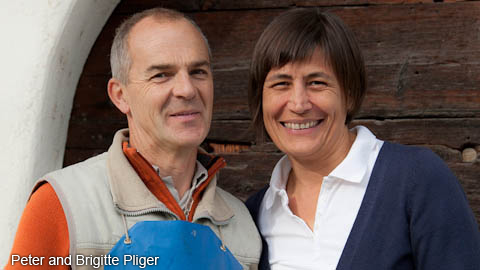
- Kuen Hof/Peter PligerAt between 600-700 mts, the Pligers farm some of the highest vineyards in mainland Europe. Their part of the Alto Adige, which used to be Austrian is largely composed of quartz and shale crushed by glacial movement and provides a fantastic mineral base for their vines. Peter Pliger farms organically with a lot of biodynamic techniques also employed and this is deliberately to assist the production of delicate but intensely mineral wines. Silvaner is a fuller bodied Riesling cross and Veltliner is better known with a Gruner prefix.
- La ZerbaOriental carpet traders Luigi and Paola Lorenzi bought a holiday house in the commune of Gavi and it is easy to understand why. La Zerba is the highest estate in the area with incredible panoramic views surrounded by vineyards. They have since given up the day job and converted the garage into a winery to produce excellent Gavi from 30 year Cortese vines planted on iron-rich soils. The wine is aromatic and refreshing yet rich in personality. The Lorenzis are exceptionally generous hosts and Paola is the most fantastic chef.
- Le Potazzine
The most striking thing about visiting the home vineyard of Le Potazzine is the sense of altitude; at 507 meters it is higher than most Montalcino vineyards, exposed and open to the winds from every direction. Some modern-styled Brunellos don`t taste as if they have been made with Sangiovese; but no danger of that here, where the high vineyards bring a welcome freshness and balance to the final wine.
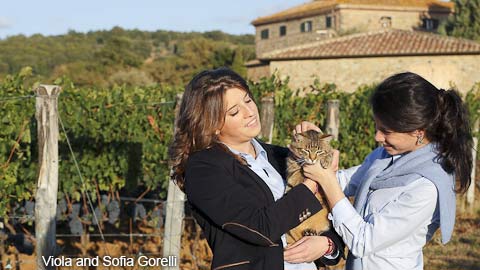
- LisiniLisini is among Montalcino`s most respected estates. They are also one of the most traditionalist, as befits a family who have a history that goes back to the time of the Medicis; they are proud to say they are the last of the region`s founding families still making wine here. Their estate is one of the few in the south-west of the region, surrounded by woodland and wild scrub; it is a warm area, but their vineyards are high up, and the combination of altitude, complex soils and low-yielding, old-vine Sangiovese gives a wine of rare expression.