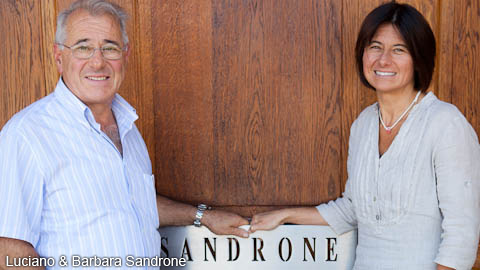
It is common to classify the big names of Barolo by whether their winemaking is traditional or modern, but Sandrone like to think of themselves as bridging the gap. This is a first generation winery; in 1977 Luciano Sandrone bought a small patch of the Cannubi vineyard, and has been gradually adding to it ever since. He made his first wines in his parents` garage. From humble beginnings have come great things. The Sandrone Cannubi Boschis was one of the first Italian wines ever to get 100 Parker points, and remains Sandrone`s flagship bottling.
Italy
Italy
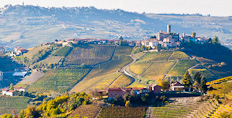
Italy is a large country filled with vines - up to nine hundred different varieties according to some sources. So we won't attempt to try to unravel its mysteries or complexities in a couple of paragraphs here, sign up for one of our courses for that! Suffice to say that the hottest part of Italy is often in the north, and that bits of the country you've never heard of make some of the best wines.
You may think Italians are an argumentative bunch only concerned with finding a way round the rules and I couldn't possibly comment, but it's the other half who have spent months meticulously drafting and redrafting those rules in the first place, and firmly believe they're the most important part of life. In every respect Italy is infuriating and seductive, so watch out, it may become a bigger part of your life than you intended!
- Masseto
Masseto is Italy’s most celebrated Merlot. Though these days it is run as an autonomous winery, it lies on the Ornellaia estate, near the village of Bolgheri, on the Tuscan coast. While it was very much a project of Lodovico Antinori, the founder of Ornellaia, Masseto owes its genesis to the celebrated Russian-American winemaker Andre Tselistcheff, who was visiting Ornellaia in its early days. Tselistcheff pinpointed a site on an estate neighbouring Ornellaia, which he said would be ideal for Merlot. Local advice and tradition went against planting vines there, but Tselistcheff disagreed.
- Mate
San Restituta is a highly desirable corner of Montalcino, known for its fine terroir and expressive wines. The complex, fossil-rich soils lend themselves to the making of serious wines, as do the sea breezes on this side of Montalcino. Just ask the neighbours – the family-owned Mate estate is situated between those of Gianfranco Soldera and Angelo Gaja, two titans of the Italian wine scene whose wines can command prices of hundreds of pounds per bottle.
- Mauro Franchino
The Alto Piemonte village of Gattinara lies tucked into the hills between Turin and Milan. In the modern era, Barolo and Barbaresco (90 km south) hog the Nebbiolo limelight, but in the 19th century some of Italy’s most sought-after Nebbiolo came from Gattinara. Locally, Nebbiolo is called Spanna, and there is a clear stylistic difference with Barolo and Barbaresco. Slightly lighter-bodied Gattinara relies less on sheer power, and more on perfume and elegance. Yet with tangy acidity and sometimes formidable tannins, the wines of Gattinara have a long capacity to age.
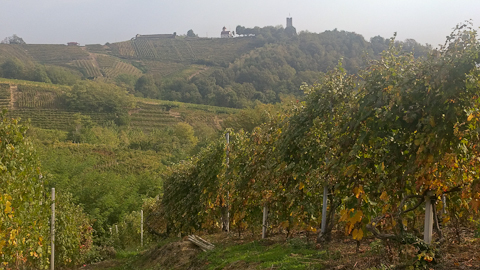
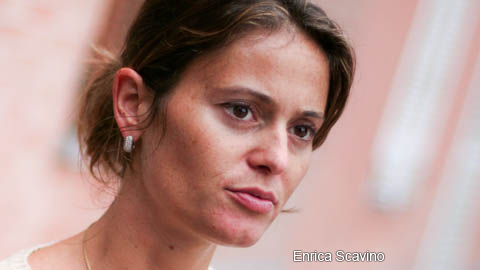
- Paolo ScavinoModernism in Barolo can be misunderstood. But do not think that the wines of Scavino, which are typically classified as modernist, are anything but elegant. From the village Barolo through the Carobric blend of crus, to the crus themselves, these wines have enormous character. Their complexity comes from the terroirs, the Nebbiolo and fastidious vineyard and cellar work. Although the estate was founded in 1921, it was Enrico, the third generation, who really started the drive to make better quality wine.
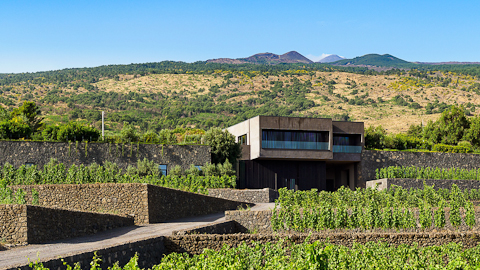
- PietradolcePietradolce is an 11 hectare estate located on the northern slopes of Etna, founded in 2005. Their vineyards are between 600 and 900 feet above sea level andare made up of stoney, light, sandy loam. The native varieties are grown here (Nerello Mascalese, Nerello Cappuccio and Carricante), to produce terroir expressive wines that are intensely bright and fresh with beautiful fruit and serious drinkability. (DS 08/04/22)
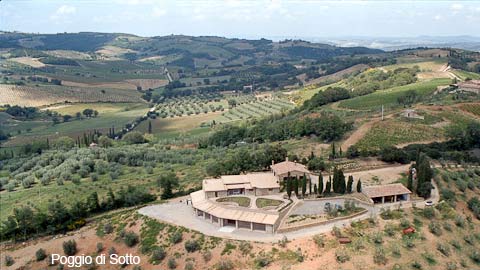
- Poggio di Sotto
On the south-facing slopes of Montalcino’s warm southern sector, it can get very hot. But on the high slopes where Poggio di Sotto’s vineyards are planted (vertiginous views if you ever visit) it can also get very cold at night, with the hulking presence of Monte Amiata and the nearby River Orcia drawing sea breezes down the valley. Such contrast between day and night temperatures is increasingly viewed as an essential ingredient in truly great wines.
- QuintarelliThe late Giuseppe Quintarelli was a traditionalist but that pales into insignificance beside his search for truth and excellence in his wines. whether the early drinking white, though the incredible depth and complexity of his Amarones, he crafted and indeed love his wines as the sons he never had. His four daughters are now custodians of his extraordinary legacy, but his genes are as much in his wines as in them. He raised his wines through a painstaking regime in the small and old fashioned cellar and was always loth to part with them.
- Renieri
It`s been a while since we visited the dapper Marco Bacci or his estates in Castelnuovo Berardenga, Montalcino and the Maremma. In fact, it`s 9 years, which means two things. first, that Marco has an even more youthful look about him in our photo than he does in reality and second, that the wines have moved on considerably. Although we saw great promise back then, by 2006 Renieri had only been in Marco`s possession for 5 years, and so it was very much a work in progress. Today, what were then new plantings are reaching maturity.
- Roagna
Although they have their family roots in Barbaresco, the Roagnas also operate in Barolo to great effect, managing both terroirs rather brilliantly. The first Barbaresco vineyard - Pajè - was purchased in the fifties and the company has grown steadily since then. The farming is uncertified but strictly organic, with low inputs and the use of techniques like cover crops between the rows of vines. The use of sulphur dioxide is very low and fermentation and the very long macerations take place in large, old casks.
- Roberto Voerzio`One of the most emotionally transcendental experiences I have ever had` - Wine Advocate, how about now? `Roberto Voerzio`s Barolos are some of the richest, deepest and most texturally beautiful wines readers will come across`. When it comes to this estate, there`s no shortage of superlatives. If Scavino and Clerico are jewels in the crown of Barolo, then surely Roberto Voerzio is the Koh-i-Noor. Roberto is a true grower, cultivating the vines on his ten hectares of La Morra organically and pretty much individually.
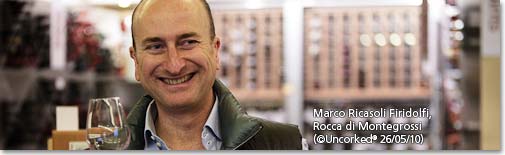
- Rocca di MontegrossiWhen it comes to Chianti, there`s no estate we love more than Rocca di Montegrossi. Parts of Tuscany can look quite manicured, but there`s a romantic wildness here; the vineyards and olive groves are beautifully tended, but the soils are rocky and the forest encroaches. The estate is in the heart of the original Chianti Classico zone, in the commune of Gaiole, equidistant between Florence, Siena and Arezzo - owner Marco Ricasoli-Firidolfi likes to describe his wines as `Gaiol-ish` in character.
- Romano Dal Forno
In the early 1980s, Romano Dal Forno had a lot on his plate. he was struggling to make a living from his family winery, while looking after three young children. He knew the wines he was making were good, but he couldn’t shake the feeling they were missing something. Fate intervened when one Bepi Quintarelli took him under his wing, and shared everything he knew about winemaking. ‘I listened to everything he had to tell me and tried my level best to understand what he was doing’. These were lessons well learnt.
- Saladini Pilastri
Based in the southern Marche, the family seat of the noble Saladini Pilastri family is near the town of Ascoli Piceno. It is situated in over 300 hectares of land, though less than half of this is down to vines. The limestone hills also host large olive groves as well as forest and scrub. This hot and dry landscape is ideal for the practice of organic viticulture and that is exactly the farming method employed here for ages. The family has been custodians of the land in this part of Italy for over a thousand years and has a deep respect for the environment where they and others live.
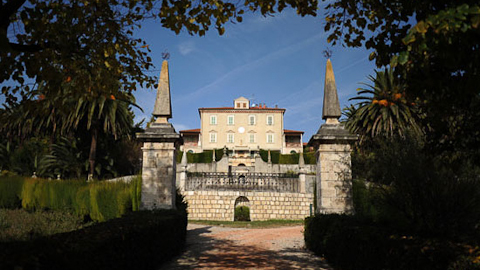
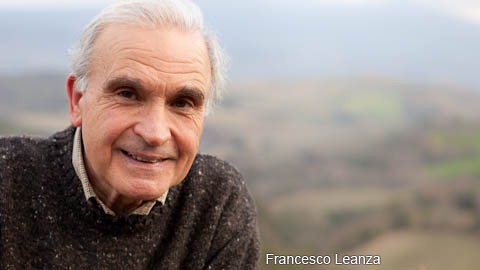
- SalicuttiFrancesco Leanza bought Podere Salicutti in 1990.
This is a simple statement that does not begin to convey the state of ruin in which he found the property. The only thing intact was the potential. There were a couple of old contadini (peasant farmers) living in the house - no heating, hot water or cooking, just an open fire. The olive groves were in disarray and a lot of vineyard needed planting and sorting out. In 1997 he moved in and looked forward to becoming a winegrower, in fact Montalcino`s first organic winegrower. He still lives in that house and he still lives very simply.
- SalvioniWow. It is very rare to find so focussed a family operation, especially when that focus is so determinedly on absolute quality. Their winegrowing regime points two ways. They are very modern in the vineyard, reducing yield to very low levels by harsh pruning and manicuring the few remaing bunches so that the grapes at harvest are perfect. Then again in the cellar they are ultra traditional with extended barrel aging and relaxed wine making so they make tiny quantities of intense, elegant wine with layers of flavour but no sign of extraction.