Burgundy/Beaujolais/Jura
Burgundy/Beaujolais/Jura
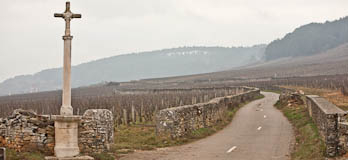
A long, thin, disjointed region encompassing three main types of rock, though a multitude of terroirs. There are only four main grape varieties, Chardonnay, Pinot Noir, Gamay and Aligoté. In the north Chablis is sited on very chalky clay and produces steely, stony Chardonnay.
You’ll also find a newish appellation of St-Bris, growing Sauvignon Blanc as you might expect only an hour from Sancerre. After a long drive southwest you arrive in the Côte d`Or, or Burgundy proper as we improperly call it. Here is limestone. Vineyard sites classified by monks form a patchwork over the hills to the east of the D974, forming an almost unbroken landscape from the southern suburbs of Dijon’s sprawl to Chagny. South of that, the Côte Chalonnaise is a fragmented region with its wine villages a distance apart from one another.
Finally the Maconnais, plump with value Chardonnay reaches down to Beaujolais and geological change gives us Gamay loving granite in the form of rolling hills. And here we find that Rabelaisian quaffing wine of pleasure, the Beaujolais itself.
There are five classifications of Beaujolais: Beaujolais, Beaujolais Supérieur, Beaujolais Villages, Beaujolais Nouveau and the 10 Beaujolais Crus. As with the rest of Burgundy, the producer's name on the bottle is often the most important factor.
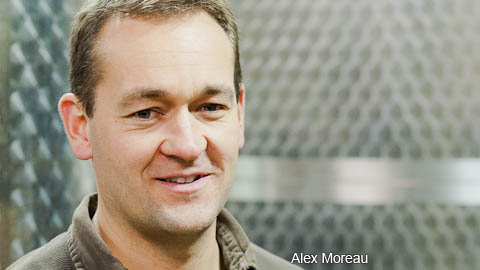
- Alex Moreau
Marcel Moreau originally developed this domaine in the 1960s. His son Bernard Moreau took over in 1982, pioneering estate bottling and the separation of the various premier crus into individual cuvees. However, it was when Bernard’s sons Alex and Benoit arrived in the early 2000s that Domaine Bernard Moreau really began to acquire a serious following. Alex handled the winery, Benoit managed the vineyards, and Bernard Moreau became known for some stunning wines in a very contemporary white Burgundian idiom. bright, tense, mineral, and full of energy.
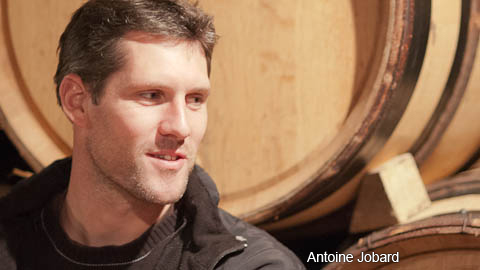
- Antoine (formerly Francois) Jobard
We saw Antoine Jobard this year for a change. He is gradually taking over more responsibility for the wines. The wines had just been racked and put onto their fine lees for the second winter in cask. The `07 harvest was finished in early September and the grapes came in with a high malic content, which will stand them in good stead from a structural point of view, and the natural alcohol was around 13%. The ripeness of the fruit combined with the high acid levels means that the wines are balanced and have good richness.
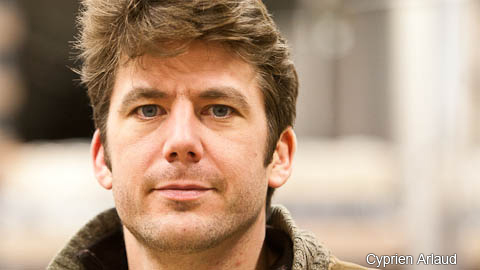
- Arlaud
Cyprien Arlaud has the natural confidence of a man at the top of his game. He has been making the wines at Domaine Arlaud since 2001 and, as he sees it, he is now reaping the benefits of his early switch to organics, followed swiftly by biodynamics. He also puts in prodigious amounts of work in the vineyard, and the domaine employs considerably more vineyard workers than any of the near neighbours.
- Ballot-Millot
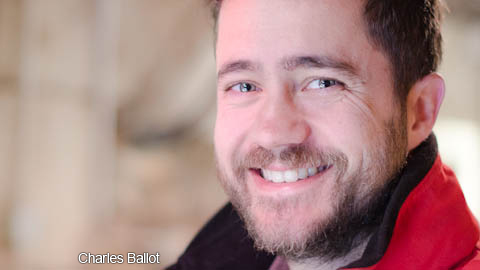
Tasting over the last few years I have never been in any doubt that Ballot-Millot is one of the finest white wine domaines in the Cote de Beaune. From his cellars in Meursault, Charles Ballot fashions a set of wines that invariably brim with verve, tension and energy. He is the 15th generation of his family to front the domaine, so perhaps it shouldn’t be too surprising that he knows what he is doing. Nor he is afraid to innovate; his wines are very much in the modern mode, lean and elegant, with a deliberate touch of reduction.
- Benedicte et Stephane Tissot
Stephane Tissot – at the domaine named after his parents, Andre et Mireille Tissot – has become the world’s most widely-known ambassador for the wines of Jura. This small, mountainous region looks across the Saone Valley to Burgundy’s Cote d’Or, but has its own very distinctive vinous heritage and traditions.
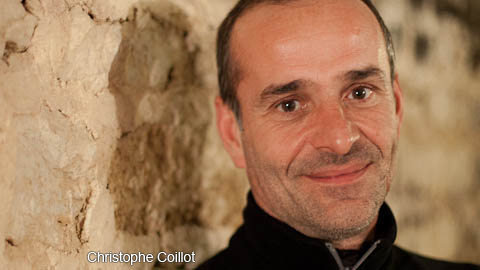
- Bernard CoillotFrom a village that is often not taken as seriously as it should be comes Christophe Coillot, who takes his wine very seriously indeed. And yet his wines are fun, in a way you don`t often find. They`re fun because of the classic, silky textures, the balance and the well judged structures, but above all else because of the fruit. 90% of the domaine is organic, and no herbicides or pesticides are used, with instead lots of hard work done by hand.
- Bernard Dugat-PyThe Dugats trace their Burgundy lineage back 13 generations now that Loic has joined. Bernard Dugat worked his first vintage in 1975 and having married Jocelyne Py in 1979 renamed the Domaine to reflect this in 1994. Dugat-Py isn’t just an historic Domaine, it is a very traditional one too. Work in the vineyards is absolutely meticulous with 10 employees in the vines making sure that the health of these old plants – average 65 years – is top notch. The Domaine has been certified organic since 2003, though Loic has gradually been introducing more elements of biodynamie.
- Berthaut-Gerbet
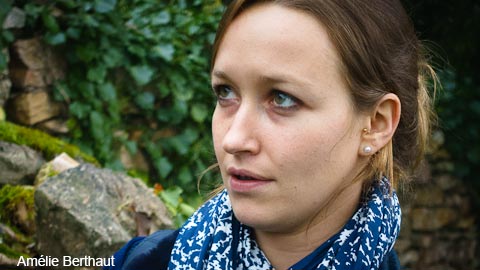
Amelie Berthaut is one of the leading lights among a new generation of growers, and since she took over in 2012, she has turned a relatively obscure family domaine into a hot property. She is also credited with putting her home village of Fixin back on the map; while it was widely overlooked until recently, in the 19th century Fixin was considered to have parts the equal of Gevrey-Chambertin. Amelie inherited an impressive array of vineyards from her parents, and has since managed to expand her reach further.
- Charles van CanneytBest known as the brains behind Hudelot-Noellat, Charles van Canneyt is so much more than a pretty face. As well as producing extremely fine and well balanced wines from his own family vineyards, he has begun a micro-negoce business in order fo fill some of the gaps in the family range and also to be able to satisfy demand for his wines. He even has some whites. Because of the way Burgundy is organised (I use the term loosely), it is quite possible to get hold of quite grand fruit, but it will cost you, so these aren`t necessarily the cheapest wines, but they are stunning.
- Christian Moreau
Fabien Moreau says his goal is to make `the most classical Chablis possible` - and the way to achieve that is `through a balance between ripeness and tension`. Domaine Christian Moreau was only officially constituted in 2002, but in reality is the culmination of six generations of work and history. Quality is always outstanding here, and the wines offer the epitome of the `oyster shell` character habitually attributed to Chablis; they are mineral and intense, tangy, structured, sometimes austere but always elegant.
- Comte ArmandThanks to the Australian government, who vetoed his visa after the French started nuclear testing in the Pacific, the young but highly experienced Benjamin Leroux stayed in France in 1999 and ended up at Comte Armand, where he had done some work experience. This is a young man in a hurry and the changes to this 7.5 ha property came fast. The first was to move to a completely biodynamic culture and picking at phenolic ripeness. Less extraction than previous regimes and a post-fermentation maceration have softened what were, for many, tough wines with little grace.
- Comtes Lafon
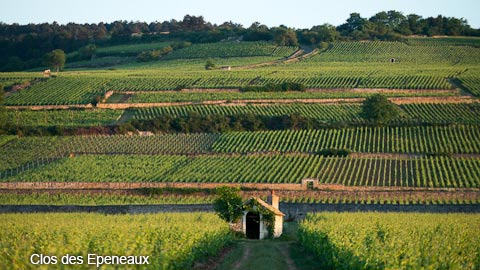
Dominque Lafon officially retired in 2021, after 37 years making wine at Comtes Lafon. He had been the first generation of the Lafon family to become a farmer and grow the grapes he vinified, and he was one of his generation’s leading lights in organic and biodynamic viticulture. Domaine des Comtes Lafon has been on the scene since the 19th century, and already enjoyed a reputation for outstanding whites when Dominque took over. Which in no way stopped him from ramping things up further, quite some distance!