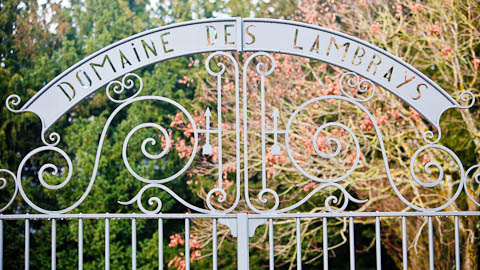
Morey-St-Denis is a fine bit of the Cote d`Or that flies under the radar of many people, overshadowed by Gevrey and Nuits, amongst others. Perhaps it was because in 1936, when they were handing down the Grand and Premier Cru classifications that the then owner refused GC status in case he had to pay more tax! Clos des Lambrays has found its place since then of course. And under Thierry Brouin has a director of immense prowess and great humility too.
Burgundy/Beaujolais/Jura
Burgundy/Beaujolais/Jura
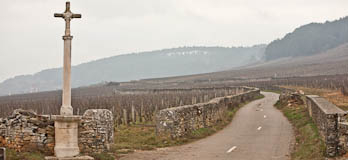
A long, thin, disjointed region encompassing three main types of rock, though a multitude of terroirs. There are only four main grape varieties, Chardonnay, Pinot Noir, Gamay and Aligoté. In the north Chablis is sited on very chalky clay and produces steely, stony Chardonnay.
You’ll also find a newish appellation of St-Bris, growing Sauvignon Blanc as you might expect only an hour from Sancerre. After a long drive southwest you arrive in the Côte d`Or, or Burgundy proper as we improperly call it. Here is limestone. Vineyard sites classified by monks form a patchwork over the hills to the east of the D974, forming an almost unbroken landscape from the southern suburbs of Dijon’s sprawl to Chagny. South of that, the Côte Chalonnaise is a fragmented region with its wine villages a distance apart from one another.
Finally the Maconnais, plump with value Chardonnay reaches down to Beaujolais and geological change gives us Gamay loving granite in the form of rolling hills. And here we find that Rabelaisian quaffing wine of pleasure, the Beaujolais itself.
There are five classifications of Beaujolais: Beaujolais, Beaujolais Supérieur, Beaujolais Villages, Beaujolais Nouveau and the 10 Beaujolais Crus. As with the rest of Burgundy, the producer's name on the bottle is often the most important factor.
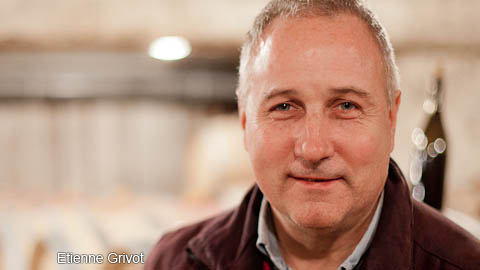
- Domaine Jean Grivot
Just across the street from Domaine de la Romanee-Conti, Vosne-Romanee Domaine Jean Grivot has a very fine set of holdings from prime sites in the Cote. Grivots go back a long way in Burgundy. Jean Grivot took over from his father Gaston in 1955, and handed control to his son Etienne in the early 1980s. When Etienne took over, it took him some years to find his own voice. At first, he moved from the house style for gentle, graceful wines towards a more concentrated style.
- Domaine Lafarge-VialFrederic Lafarge has established Domaine Lafarge-Vial in the charming, dramatic village of Fleurie. The wines are vinified back in Volnay, but Frederic was keen to tell me the fruit here demands a different approach; he vinifies his Fleurie with 30% whole cluster, which brings a more expressive, aromatic style. /NT
- Dujac
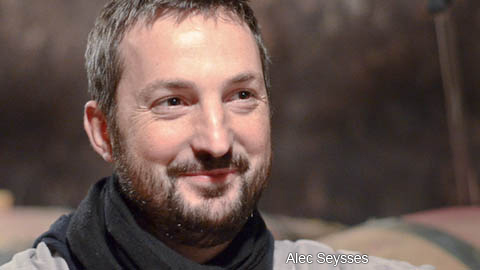
One of Burgundy’s most celebrated domaines. It began with Jacques Seysses, who had apprenticed with Gerard Potel at Domaine de la Pousse d’Or. In 1967, Jacques bought a small domaine in Morey-St-Denis and named it after himself – ‘du Jac’. (Geddit?) His first vintage was the terrible 1968, and he sold it off in bulk. But 1969 was a great success, and that vintage put Dujac on the map. The domaine began to grow with the opportunistic acquisition of some great parcels.
- Etienne Sauzet
There are few domaines that have such good holdings in Puligny-Montrachet, or are as highly-regarded in the village, as Etienne Sauzet. The domaine was founded in the 1920s by the eponymous Etienne, and it quickly acquired its elevated reputation. Etienne died in 1975, and his son-in-law Gerard Boudot took over. Things changed again in 1991, when the domaine was split between Etienne’s three grandchildren, with JM Boillot taking his share of the vineyards elsewhere.
- Felettig
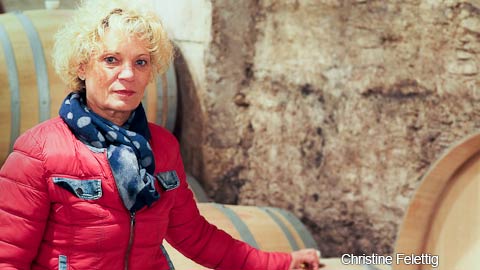
Domaine Felettig has an origin story you hear time and again across Burgundy (and more broadly, across much of France and viticultural Europe). Grape cultivators gradually become landowners in their own right, and sent their grapes to the village co-op until someone (in this case, Henri Felettig) took the dramatic decision to begin estate bottling. Over time, family holdings increased. In 1993, the next generation took over, with Gilbert handling the winemaking and his sister Christine administering the domaine.
- Francois BertheauWhat can one say about Francois that won`t be misinterpreted? Capricious, fey, self-deprecating, tiny, dedicated, giggly as hell, slightly anxious about his wines, says pfff more often than any other Frenchman I`ve ever met, crafter of brilliant Chambolle. I`m not sure he ever wanted to be a winemaker, but he`s a bloody good one. (CW 14/03/14)

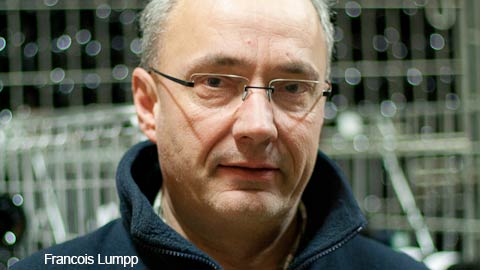
- Francois LumppAnytime that a book or report on Burgundy arrives, I can imagine the conversation over the Lumpp breakfast table. `Nice review for your wines, dear.` `Did they say my wines are solid, workmanlike and ambitious Givrys, dear?` `Of course, dear, well done.` Frustrating though that must be, it is at least part of the truth. There is also perfume and depth and great pleasure to be had from these excellent value wines. In 2009 the Domaine was our first visit and got us off to a flying start. Silky tannins and vivid acidity underpinned the fresh and complex fruit.
- Francois RaquilletFrancois Raquillet is a typical modern Burgundian. He retains many strong links to the past but is constantly searching to improve his wines, either through better vineyard work or in the cellar. Blessed with a lot of old vines, he strives to keep yields fairly low, makes full use of a sorting table - which means throwing away a lot of fruit - and in the end the results are fruit-driven, pure wines that see a maximum of 30% new oak and are unobscured by it. Overall the style is robust but perfumed with well done tannins in the reds and dense, herby, citrussy whites.
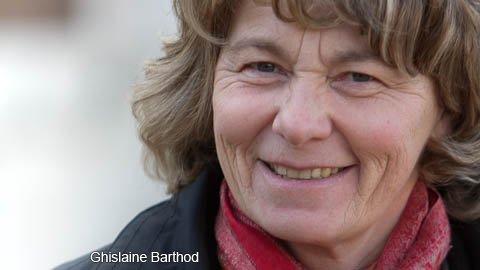
- Ghislaine Barthod
It’s partly the fine winemaking, and partly the low availability, and partly the fact that the holdings here are a focussed range of fine Chambolle, but the wines of Domaine Barthod are among the most sought-after we have to divide up en primeur. Even the Bourgogne Rouge (labelled as ‘Les Bons Batons’ in some markets) is a hot ticket, well beyond what you would expect from a Bourgogne Rouge at most addresses. It ages well, and in most vintages it will only be getting into its stride when others of its level have faded.