Burgundy/Beaujolais/Jura
Burgundy/Beaujolais/Jura
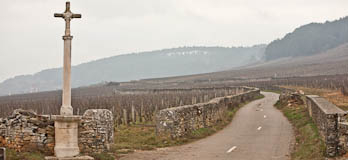
A long, thin, disjointed region encompassing three main types of rock, though a multitude of terroirs. There are only four main grape varieties, Chardonnay, Pinot Noir, Gamay and Aligoté. In the north Chablis is sited on very chalky clay and produces steely, stony Chardonnay.
You’ll also find a newish appellation of St-Bris, growing Sauvignon Blanc as you might expect only an hour from Sancerre. After a long drive southwest you arrive in the Côte d`Or, or Burgundy proper as we improperly call it. Here is limestone. Vineyard sites classified by monks form a patchwork over the hills to the east of the D974, forming an almost unbroken landscape from the southern suburbs of Dijon’s sprawl to Chagny. South of that, the Côte Chalonnaise is a fragmented region with its wine villages a distance apart from one another.
Finally the Maconnais, plump with value Chardonnay reaches down to Beaujolais and geological change gives us Gamay loving granite in the form of rolling hills. And here we find that Rabelaisian quaffing wine of pleasure, the Beaujolais itself.
There are five classifications of Beaujolais: Beaujolais, Beaujolais Supérieur, Beaujolais Villages, Beaujolais Nouveau and the 10 Beaujolais Crus. As with the rest of Burgundy, the producer's name on the bottle is often the most important factor.
- Ghislaine Barthod
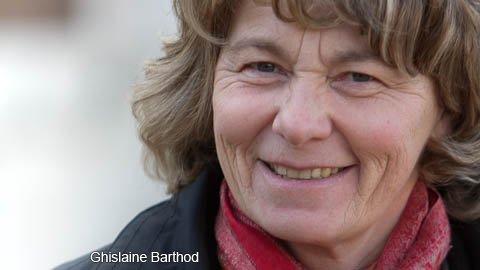
It’s partly the fine winemaking, and partly the low availability, and partly the fact that the holdings here are a focussed range of fine Chambolle, but the wines of Domaine Barthod are among the most sought-after we have to divide up en primeur. Even the Bourgogne Rouge (labelled as ‘Les Bons Batons’ in some markets) is a hot ticket, well beyond what you would expect from a Bourgogne Rouge at most addresses. It ages well, and in most vintages it will only be getting into its stride when others of its level have faded.
- Henri Gouges
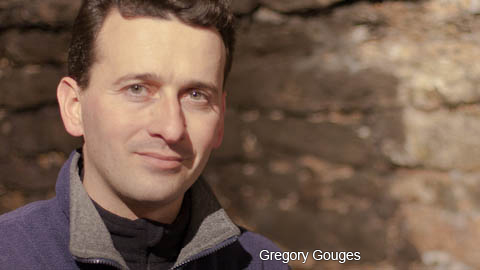
The defining estate in Nuits-St-Georges. One hundred years after Henri Gouges returned from the First World War and became a pioneer of domaine bottling and a champion of the region, Gouges are going strong. The stewardship of Henri’s great-grandsons Greg and Antoine is winning round a new generation of fans, and these two cousins have had a cracking fifteen years in charge.
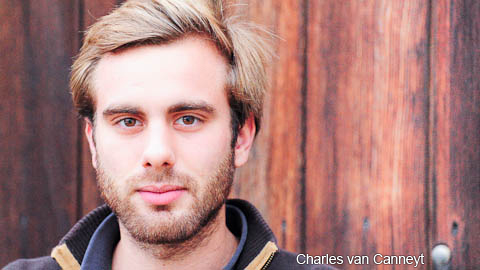
- Henri MagnienOur biggest new discovery of November 2019 was in Gevrey. The tasting at Henri Magnien completely bowled us over; we found intense, expressive wines, that were beautifully textured and bountifully aromatic. We decided on the spot we had to have them. This is another domaine with a lot of history behind it - the Magniens go back to 1656, and the affable Charles Magnien, who took over a decade ago, represents no less than the twelfth generation here. Not only do they have some fantastic sites with old vines, they even have their very own clone of Pinot Noir.
- Hubert LamyHubert Lamy continues to produce wines that are equal parts genius and bonkers. We refer to them as the Cotat of St-Aubin. Who else would plant as many as 30,000 vines per hectare, risking the wrath of the appellation authorities just to see if it makes better wine? It does, by the way!
- Jean Chauvenet
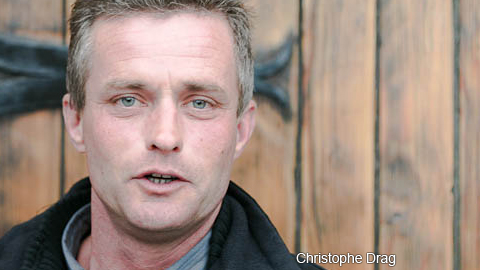
Thank goodness the Chauvenet estate isn`t just a few pocket handkerchief size bits of land scattered round the region, because this is another address where the yields are falling year on year at the moment. Despite this, Christophe still has wine to sell. A witty but reserved man with an appealing combination of confidence and humility, his wines, which in some respects pay homage to Henri Jayer, though less obtrusively oaked, continue in the ageworthy mould.
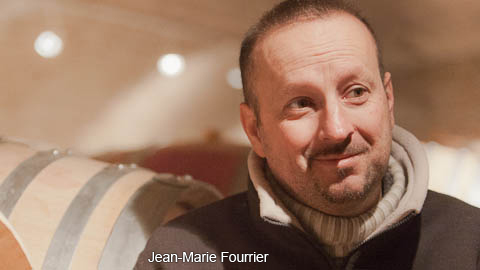
- Jean-Marie FourrierThe thirtieth of October 2008. A milestone in my wine education, because the day was bookended by visits to and tastings with Fourrier and Grivot. My Burgundy obsession is shamefully recent, but even I have verticals of Fourrier wines going back to 2001, three years after Jean-Marie, whose evil twin is Rafa Benitez, began making the great strategic decisions that have taken him close to the top of the league in Burgundy.
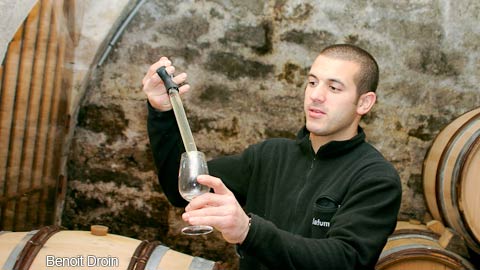
- Jean-Paul & Benoit Droin
There have been Droins working the Chablis scene for a long time. 14 generations over 400 years, in fact. Over that time, they have amassed a fabulous set of premier and grand cru holdings. Benoît Droin took over in 1999, and has never sat still since. In the vineyard, he improved pruning systems and reduced yields. In the winery, he switched all fermentation to indigenous yeasts, and dialled back on the new oak his father Jean-Paul had introduced.
- Joseph Colin
`Moi, j’aime les vins avec energie, fraicheur, vigueur.` The wines of Joseph Colin are tense and intense, complex and energetic - a little like the man himself. This is still a relatively new domaine, but you`d never know that from the quality of the wines. Since 2016 Joseph has cultivated his share of the Colin family vineyards, six hectares spread across Chassagne, Puligny and Saint Aubin. He resists what he sees as the classificatory straitjacket of biodynamic viticulture, but has nevertheless adopted many biodynamic practices.
- Joseph Drouhin
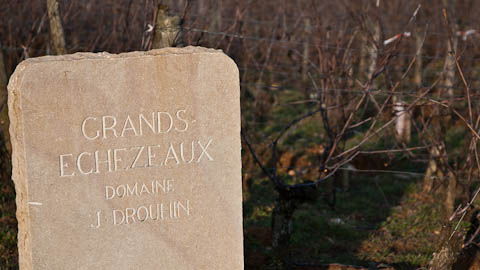
Maison, landowner, producer, negociant; Joseph Drouhin make a stunning set of wines from some of Burgundy’s finest terroirs, and apply the very best of modern practice in viticulture and vinification. Their vineyard-focused approach, foregrounding low yields, high density plantings, organics and biodynamics mean all their wines are marked by a strong sense of its individual terroir.
- LorenzonBruno Lorenzon farms 9 hectares between Mercurey and Montagny, but when you taste his wines it`s easy to forget where you are - they have the breed and class of somewhere much more glamorous than their postcode! Montagny is most known for its white wines, and Bruno`s are outstanding. Mont Laurent is meticulously crafted, full of focus, drive and elegance, Choix du Roy combines generous yellow fruit with intensity, good structure and a chiselled, saline finish. A very welcome addition to our portfolio. (NT 16/02/21)
- Louis Jadot
Jadot is a producer of two faces. On the one hand they are one of Burgundy`s largest and most prolific negociant producers, whose wines appear in supermarkets and high street chains in many countries. On the other, they own and farm plots and monopoles in some of the region`s most desirable real estate. Their iconic leader on the winemaking front is Jacques Lardiere, who - shockingly - is obsessed with terroir, rather than easy drinking fruit. His concerns are much taken up with the rock under the soil and making wines with as little intervention as possible.
- Marc Colin
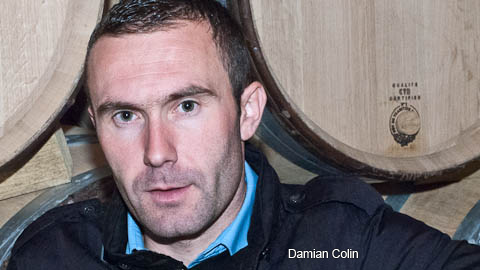
At Domaine Marc Colin, Damien and his sister Caroline are making some seriously good, high-energy wine. The domaine dates back to the 1970s, and was built from the ground up by Marc Colin and his wife Michele, from vineyards that had been in their families for generations. Two of Marc’s four children have since gone their own ways, taking their share of family vineyards; so Pierre-Yves left to start Domaine Pierre-Yves Colin-Morey, and Joseph left to start Domaine Joseph Colin. Damien and his sister Caroline stayed in control of Marc Colin.
- Meo-Camuzet
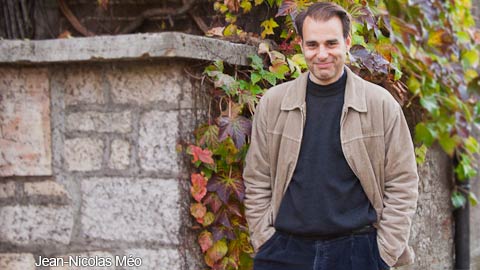
Meo-Camuzet is one of the most respected domaines anywhere the Cote d’Or. Until 1988, the vineyards were leased out to other vignerons who share-cropped the land, with much of the wine sold off in bulk. But they had some exceptional vineyards and some more than decent tenants, especially one Henri Jayer. Changes to French laws meant that the family would have to start farming their own land or sell it. Rather than lose his family vineyards, family scion Jean-Nicolas Meo accepted a dramatic career change and took the plunge. He moved to Vosne in 1989.