Bordeaux
Bordeaux
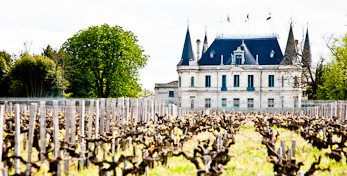
An enormous region producing large amounts of quality wine that was once the most favoured in these islands. Now, the top 3% of producers are the most privileged in the world, while the rest, as the market has expanded, have somewhat ironically lost market share to the sweetened fruit juice imported from other parts of the world. Affinity with Bordeaux partly stems from our historical ownership of it, while the Scots started drinking it to support later French owners in their wars against the English.
- Chateau Gazin
Pomerol estate Gazin has a full 19 hectares of vines on the plateau, more than any other winery in the appellation, all in one single block. It also commands the appellation’s highest point, next to Petrus, at just over 40 metres. The vineyard is planted to 90% Merlot, 7% Cabernet Sauvignon and 3% Cabernet Franc, though the proportion of Cabernets is set to increase in response to climate change. (NT 12/05/25)
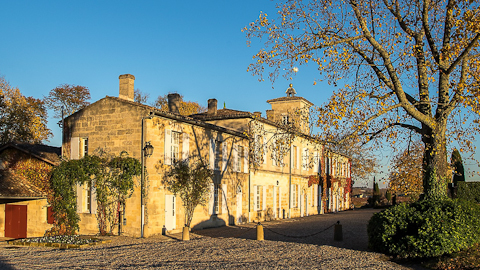
- Chateau Giscours
Margaux Third Growth Giscours is an older estate than most. It is referenced as a fortified property in a 1330 document, and recorded as making wine in 1552. It was confiscated from its aristocratic owners in the French Revolution, and re-sold, initially to two Americans from Boston. A long list of other owners followed. The most notable nineteenth century name here was not an owner at all, but Estate Manager Pierre Skawinski, one of the great agricultural innovators of his day.
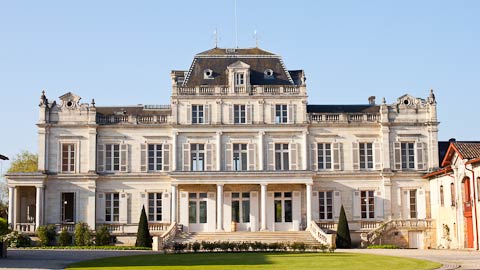
- Chateau Grand Mayne
The vineyards of St-Emilion property Grand Mayne lie in one single block around the rather stately manor house of a chateau, on the slopes leading up to the western flank of the town. Jean-Antoine Nony has been full-time director here since 2012, and improving the vineyards has been his mission ever since. One of his first decisions was to begin a slow replanting programme, with the ultimate goal of bringing the proportion of Cabernet Franc in the vineyards back up to the 35% it was in 1934, when his grandfather acquired the property.
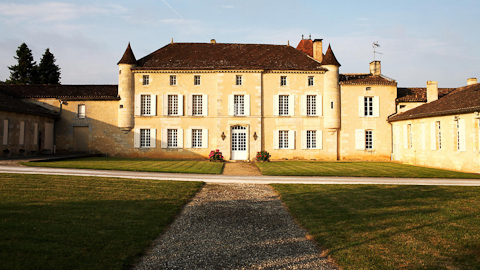
- Chateau Grand-Puy DucasseWith history building an ownership of three main shareholders, an estate of vineyards split into three distinct plots across Pauillac and the Chateau itself unusually sited in the town docks, Ducasse prospers. Possibly despite the complicated nature of the enterprise. Those three vineyard plots are of fine and homogeneous terroir, all brilliantly sited on deep gravel mounds with some really old vines as well as some more recent replantings as part of the large and ongoing investments.

- Chateau Grand-Puy-Lacoste
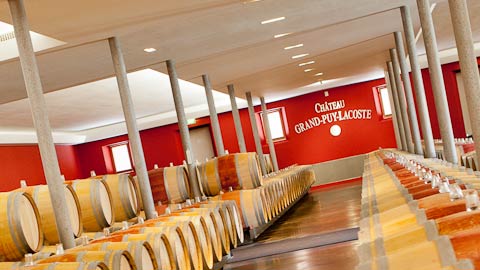
Of the two Pauillac properties whose names begin Grand-Puy, it is Grand-Puy-Lacoste that enjoys rather more prestige over Grand-Puy-Ducasse. Turn the clock back to the 1855 classification of the Medoc, though, and they were the same property, Grand Puy. It was awarded fifth-growth status, a distinction both the successor chateaux still hold. But that feels like a sad undervaluing of Grand-Puy-Lacoste, a property that regularly puts many second-growths to shame.
- Chateau Gruaud Larose
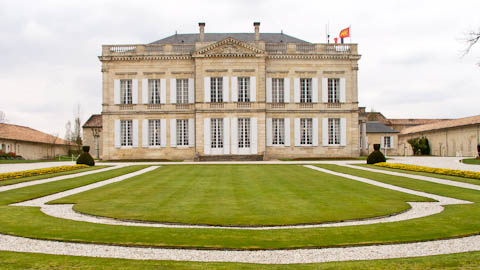
1855 second growth Gruaud-Larose is very much one of the grander estates in Saint-Julien. It occupies a high point on the Medoc plateau and I can attest it gets windy there; that wind serves to dry the vines and help prevent vine infections. The modernistic viewing tower that divides opinion and stands in angular contrast to the classical chateau does enjoy some far-reaching views of the Medoc.
- Chateau Guillot ClauzelHorribly underperformed in the nineties, but under the brilliant Francois Despagne, an oenology professor and superb viticulturalist, and with Dominique Thienpoint at the sales helm, this is one property that is sure to come to greater prominence. We were very impressed with the silky tannins and black cherry fruit. An ideal buy for those wishing to get in on the ground floor!/CW
- Chateau Haut-Bages Liberal
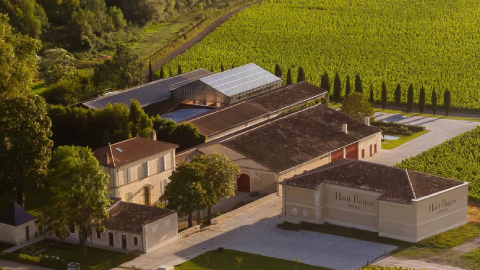
At one of Pauillac’s highest spots, with plots next to Latour (overlooking the Gironde) and to Pichon-Baron (on the Bages plateau), Haut-Bages Liberal has always enjoyed great terroir. But even that is not enough to explain the quality of recent vintages here. Jane Anson calls owner Claire Villars ‘one of the most exciting winemakers in Bordeaux’, and the work that Claire has been doing here is remarkable. She has completely transitioned the estate to biodynamic viticulture.
- Chateau Haut-Bailly
There are a few things that make Haut-Bailly special. There`s the fact that nearly 15% of the vines are still prephylloxera, that it is one of the few Pessac-Leognan properties not to make white wine, that it has soil that actually contributes to that rare thing in Bordeaux - real sense of terroir. That soil is sandy seabed stuffed with shellfish fossils. As a property it is less than 150 years old and like many Bordeaux estates has seen its fair share of ups, downs and idiosyncratic owners.
- Chateau Haut-Batailley
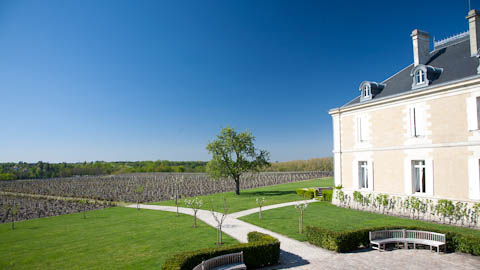
In 1942, the Batailley estate was divided into two, so that two brothers could each have their own part. One half continued under the name Batailley, and the other (smaller) part was re-christened Haut-Batailley. Like Batailley itself, Haut-Batailley is a fifth growth under the terms of the 1855 classification, as a continuation of an 1855 classified estate. For decades, it was ably managed (but not owned) by Francois-Xavier Borie (who owns Grand-Puy-Lacoste), and in 2006 he began a huge renovation of the wine-making facilities and cellars.
- Chateau Haut-Brion
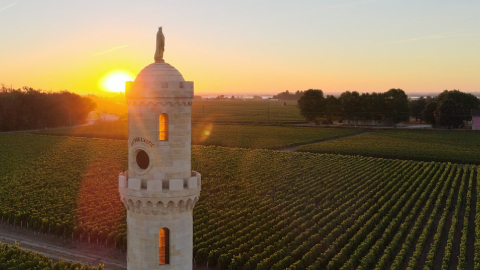
‘I drank a sort of French wine called Ho-Bryan that hath a good and most particular taste I never met with.’ The April 10th, 1663, entry in Samuel Pepys’ diary is regarded as the ever first published wine review, but it was not the entry of this wine into the English consciousness. Haut-Brion had already been served to King Charles II three years earlier, on his restoration to the throne. In fact, Haut-Brion is surely the most storied historical property in all of Bordeaux.
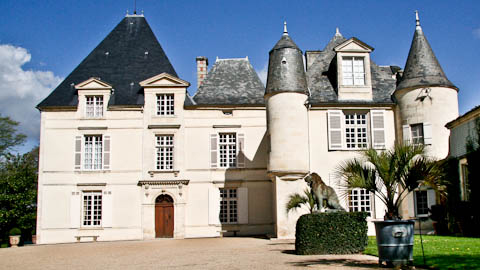
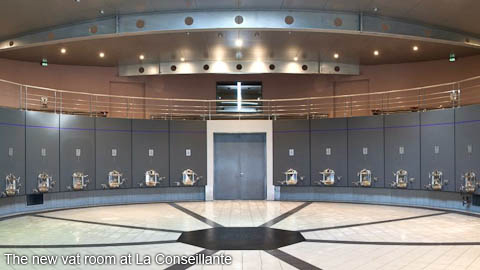
- Chateau la ConseillanteLa Conseillante is at the cusp of the very top tier of the Pomerol appellation. It ought to be, given its neighbours; L’Evangile to the east, Petrus to the north, Vieux Chateau Certan to the north-west and Cheval Blanc across the road. The name comes from one Madame Catherine Conseillan, who in the early eighteenth century acquired vineyards with the current boundaries from an earlier estate being broken up.