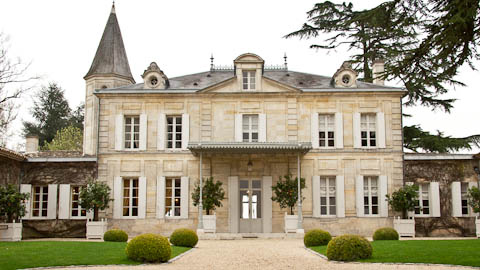
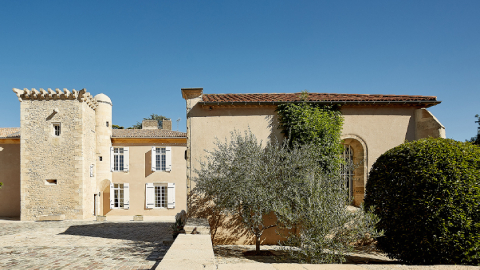
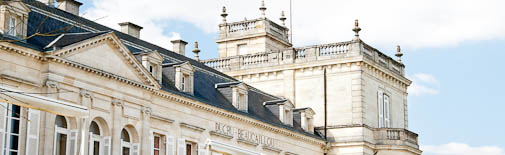
In 2021, Chateau Cheval Blanc, along with Chateau Ausone, withdrew from the St-Emilion classification. These chateaux alleged doubts about the criteria for (re)classification, citing a drift away from the pre-eminence on terroir towards a focus on marketing considerations. Some critics implied they were miffed by the prospect of having to share their exalted ‘Premier Grand Cru Classe A’ status with more chateau (it had been their exclusive preserve prior to the 2012 promotion of Pavie and Angelus).
Bordeaux
Bordeaux
An enormous region producing large amounts of quality wine that was once the most favoured in these islands. Now, the top 3% of producers are the most privileged in the world, while the rest, as the market has expanded, have somewhat ironically lost market share to the sweetened fruit juice imported from other parts of the world. Affinity with Bordeaux partly stems from our historical ownership of it, while the Scots started drinking it to support later French owners in their wars against the English.
- Chateau Clerc MilonThere is a party on the label of Clerc Milon and the property`s history over the last forty years certainly justifies a celebration. Rescued by Baron Philippe de Rothschold in 1970, the estate has been renovated in both vineyards and cellars, but the average age of the vines is still just over forty years. Because of a mixture of soils, the proportion of Cabernet Sauvignon here is less than might be typical in Pauillac with good dollops of Cabernet Franc and even the now rare in Bordeaux Carmenere.
- Chateau Climens
It is known as the ‘seigneur de Barsac’ for its pre-eminence in its commune, and in the canon of sweet Bordeaux wines, Climens is near the peak. In some vintages it challenges Yquem for top spot. Michael Broadbent used to say that Climens and Cheval Blanc were the two most consistent properties in Bordeaux, and coming from a man who in his decades as Director of Wine at Christies Auction House tasted more great old wine than anyone alive, that’s a pretty strong endorsement. In the 1855 classification of Sauternes and Barsac, Climens was listed as a premier cru.
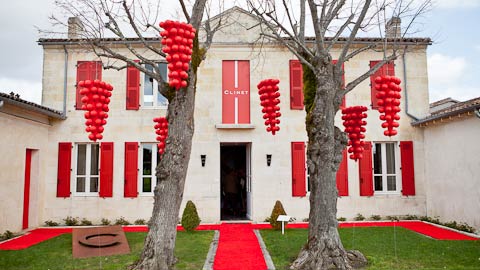
- Chateau Clinet
Vines first went into the ground at Clinet in 1758, making it one of Pomerol’s oldest estates. By the early nineteenth century, with vineyards proliferating, Clinet was regarded as one of the very best. Fast forward to the late 1970s, when Estate Manager Jean-Michel Arcaute arrived here. In his determination to restore Clinet to its nineteenth century glory, he completely reformed vineyard practise here – and a lot of Bordeaux began to follow. In came leaf thinning and green harvesting. Out went machine harvesting, to ensure only the best grapes were picked.
- Chateau Cos d`EstournelThe chateau at Cos d’Estournel is an Oriental extravagance quite out of keeping with the conventional image of a Bordeaux chateau, to wit, a sedate, serene construction in cream-coloured limestone. Cos d’Estournel reflects the eccentricities and travel habits of its founder, Louis Gaspard d’Estournel, a wealthy young man of the Medoc who had acquired a small parcel of vines near the village of Cos and who, seeing great potential, resolved to create a wine of the stature of Lafite.
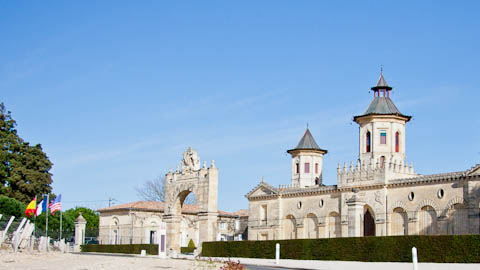
- Chateau d`Issan
While most vineyards in the Medoc were not laid out till the 17th century when the marshes had been drained, wine has been made continually at d’Issan since the 12th century. In 1152, wine made at Issan – then under the name of La Mothe-Cantenac – was served at the marriage of Eleanor of Aquitane and Henri II. In 1453, after losing the Battle of Castillon which concluded the Hundred Years’ War, the surviving English troops took refuge at the fortified castle here. In the 17th century, it became the property of the d’Essenault family, and d’Issan is a phonetic spelling of their name.
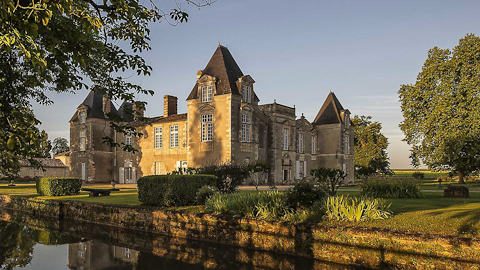
- Chateau d`Yquem
When we say that Chateau d’Yquem is in a class of its own, we mean that literally – it gets the top tier in the 1855 classification of the white wines of the Gironde, Premier Cru Superieur, all to itself. And its terroir really does put it head and shoulders above other Sauternes properties – it stands at the highest point in the appellation, offering views all around. It’s a genuine advantage for the vines - that elevation allows the wind to remove excess moisture from the vines as noble rot settles in.
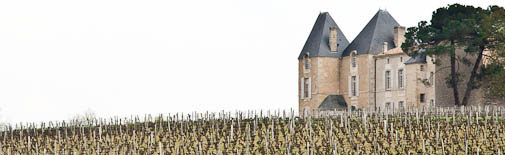
- Chateau de Fieuzal
One early owner gifted a family name to the chateau. A different set of nineteenth-century owners with connections to Pope Leo XIII made de Fieuzal famous by filling the Vatican’s wine cellars with the wine. Since 2001, de Fieuzal has been owned by Lochlan Quinn, former chairman of the Allied Irish Bank. The size of the vineyard hasn’t deterred him from pushing for the chateau to partially adopt biodynamic viticulture, on top of which, if you visit, you will find vegetable gardens, henhouses and beehives.
- Chateau de PezRoederer`s stewardship of de Pez since they took it over in 1995 is a study in how to improve a property. They have had a long look at the mix of vine varieties and the soils and have tried to match them more precisely, planting more Merlot where appropriate. They have also changed the trellising arrangements for the vines to promote better and more even ripening, while in the cellar, retention of the wooden fermenting vats, now temperature controlled, and more attention to hygiene mean the wines are suppler, fruitier and somewhat more attractive when young.
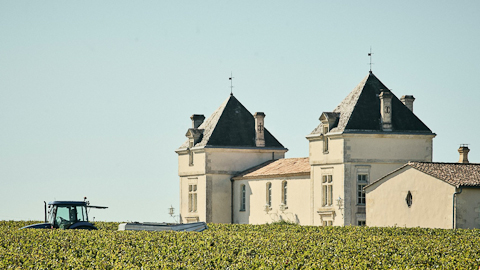
- Chateau Ducru-Beaucaillou
Between Beychevelle to the north and Latour across the commune boundary to the south in Pauillac, and running almost down to the Gironde, sits one of the clutch of 5 St Julien second growths, Ducru-Beaucaillou. Beychevelle is in fact a parent of Ducru; in 1642, when the British were just getting going on the killing spree now referred to as the English Civil War, the Beychevelle estate was broken up to settle a debt, and one of the resulting parcels would become what is now Ducru-Beaucaillou. The name didn`t come till later.
- Chateau Duhart-Milon
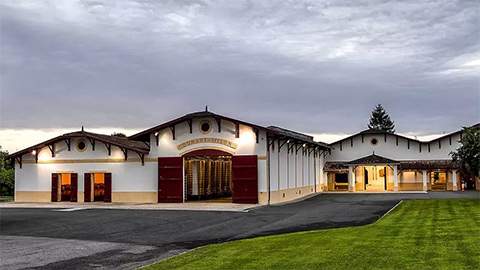
Duhart-Milon is a stablemate of Lafite. The vineyards are adjacent, with the same fine gravels and black sands over a bedrock of limestone, but Duhart lies on lower ground with a more northerly exposure. Once upon a time, it was made as the second wine of Lafite, and for even longer it remained in Lafite`s shadow. But it has evolved an identity all its own, under its own technical team since 2001, and it has gone from strength to strength over the last two decades. It used to be marked by a certain youthful austerity, but is typically richer these days.
- Chateau Durfort-Vivens
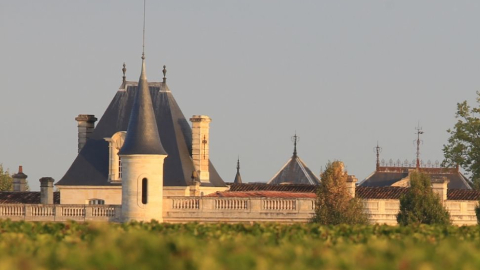
Durfort-Vivens had a good 19th century. The 1844 was priced higher than any other Margaux wine except Chateau Margaux itself. Commentator, wine connoisseur and future American president Thomas Jefferson rated Durfort-Vivens alongside Lafite, Latour and Margaux. The 1855 classification placed it as a second growth. Things weren’t so good through most of the 20th century. In the 1930s, it was bought by Margaux and used to make that chateau’s second wine. In the 1960s, it was sold on to the Lurton family, but without its chateau.
- Chateau Feytit-Clinet
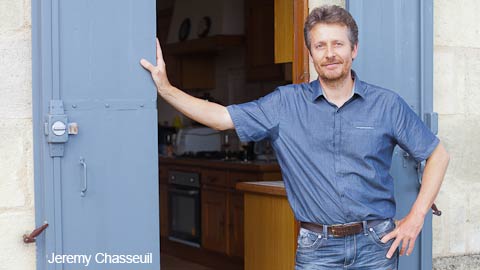
A visit to Feytit-Clinet is so unlike a visit to most Bordeaux chateaux. It’s not a castle or a stately home, nor are you filtered past receptionists or along mirrored halls. In fact, it’s much more like a visit to Burgundy where the owner stomps out from round the back in welly boots, kicking their kids` toys out of the way as they go. Jeremy Chasseuil lives and works here, and has done since the year 2000 when he took over.
- Chateau Figeac
Figeac was one of the winners in the 2022 St-Emilion reclassification, and it now plays in the very top league, Premier Grand Cru Classe (A). It should probably have always been there, but never mind. It is one of the oldest properties in Bordeaux, with roots in the second century and the Roman Figeacus family. (I know that sounds like it comes from the Life of Brian, but it’s for real, and there are Gallo-Roman remains on the property). The Manoncourt family arrived in 1892, and remain here to this day.