Rhone/southern France
Rhone/southern France
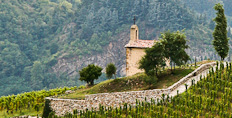
When driving south through France it always feels that as one reaches Lyon it should become hot and sunny – somewhat prematurely as there are still over 300 kilometers before reaching the Mediterranean. So the northern Rhone is cool, the northern limit of Syrah and that is what makes the grape perform so magically here, triumph through struggle. And it is a struggle, much of the good or great wine is grown on precipitous hillsides, steeply and narrowly terraced and useless as a workplace for those with vertigo. Viognier, the north’s most high maintenance grape variety is grown in similar conditions and the combination of hillside, river and the beginnings of mistral are essential to quality. Marsanne and Roussanne are other white wine vines found in this area where in fact white wine used to dominate. Côte Rôti, Condrieu, St-Joseph, Hermitage, Crozes, Cornas and St-Peray make up the north.
In the south, after a bit of a gap in the vines and some majestic wind turbines cunningly sited along the autoroute the southern Rhone begins. Supplementary: which two types of confectionary are produced in the Rhone valley? In the south we are much nearer the Med and Grenache takes over from Syrah as dominant red. Villages like Sablet, Rasteau, Gigondas and Chateauneuf-du-Pape all make hedonistic wines of varying quality and style. Picking the best and most interesting and delicious is our job.
The south also gives us lipsmacking rosés from Tavel and Lirac. Travelling south and west from the plateau of Chateauneuf brings us to first Languedoc and then Roussillon, two regions lumped together yet of very different character. The former displays a split personality with many growers of the old school lost and angry as they fail to adapt to the loss of subsidies and the arrival of the market. On the other hand there are contemporary growers, entrepreneurial and energetic and often incomers, though plenty of natives are enthused by their vineyards' potential too. Their's is a green and pleasant land. Roussillon is rockier, more austere, a Catalan land of fortified houses and fortified wines on a bleaker, more imposing landscape.
- Franck BalthazarFranck Balthazar makes his best wines from 2 very old parcels of vines on the granitic slopes of Les Chaillots above the village of Cornas – the Cornas Chaillot includes some vines planted in 1911. The domaine was founded by Balthazar’s grandfather, and has always been in family hands, growing over time. In 2006 Balthazar acquired a further prestigious parcel in the Chaillots vineyard from his uncle, the great Noel Verset, who was then winding down his own domaine. Ploughing is done by horse, and the domaine converted to fully organic viticulture in 2010.
- J M GerinDomaine Gerin was born in 1983, when they bought a single plot in the heart of Cote-Rotie. Four years later they bottled their first wine, and have been producing highly regarded red and white wine from the Northern Rhone ever since. Today, the property has expanded to over 17 hectares and brothers Michael and Alexis are at the helm. Since 2020 they have been farming organically and continue to produce high class wines which are powerful and structured, yet also elegant and refined. (DS 04/04/22)
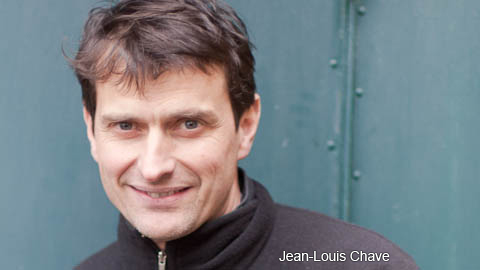
- Jean-Louis ChaveIntriguingly, the heavily bolted door leading into the Domaine Chave Hermitage cellar seems to have opened a little. Jean-Louis is a man of fierce intellect and a sense of his place in the world. He has a vision for Hermitage for sure, and has assumed easily the responsibility of being one of that appellation`s leaders. He is worried by St-Joseph - St-Jo if you are seeking to appear up to speed with the area. He can`t work out whether to try to encourage St-Jo to make better wines, or blow it up. (CW 20/03/08)
- Le Soula
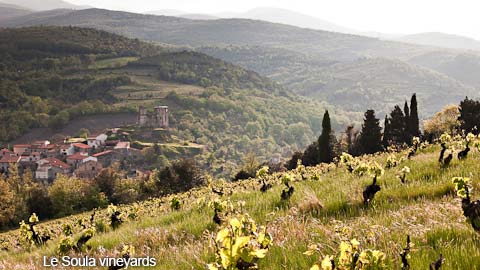
We don’t stock many wines from Languedoc-Roussillon, but Le Soula is a bit remarkable. When winemaker Gerard Gauby discovered an abandoned parcel of wines in the Agly Valley up in the foothills of the Pyrenees, he saw the site had enormous potential. The poor, granitic soils and a climate that combined the extremes of southern sun and mountain rain and wind were sure to make the vines work hard. Gerard teamed up with Richards Walford Wine Importers and together they brought Le Soula to life, making both reds and whites with powerful flavours and bags of energy.
- Les CaillouxFinal appointment of the day, and the cold was beginning to penetrate to the bone, but our first visit to Cailloux still induced excitement. We`d had a Centenaire `95 at La Beaugraviere, and then a 2001 Tradition at Le Mere Germaine and couldn`t help being reminded of Chateau Rayas - or rather its remarkable resemblance to top-class Pinot Noir. Having finally deduced which property it was (it`s in the centre of Chateauneuf, but with no signposts - no markings at all - and surprisingly tatty), we were greeted by Andre Brunel himself.
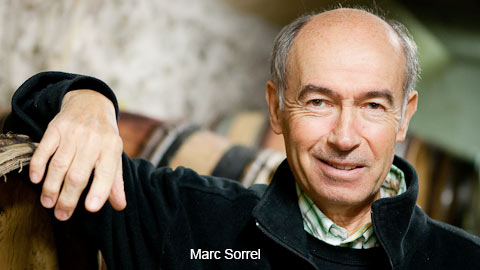
- Marc Sorrel
By far the majority of the best plots on Hermitage hill are owned by the big producers, but one of the few exceptions is at Marc Sorrel. The domaine has plots in some fantastic sites. The Sorrels make few concessions to modernism, with very little new oak allowed in the cellar. Nor do they hold with the modern vogue for single site bottlings, maintaining that Hermitage has traditionally always been a blend – though their Greal is a blend of the very, very best. The cellars are in the main street of Tain, a quick walk from the hill.
- MarcouxAlways a top performer in Chateauneuf-du-Pape, Marcoux make a very purely-styled tradition cuvee from old vine stock. They were one of the first domaines in Chateauneuf to take up biodynamic viticulture. Oak use is minimal, with the intention being to supply structure to the wine, while allowing a purer fruit character to show through. But what has really made this domaine famous is the rarer Vieilles Vignes cuvee. For many tasters this is the most profound Chateauneuf of all. It marries fruit from two plots of old vines. lieux-dits Charbonnieres (planted in 1900) and Les Esqueirons.
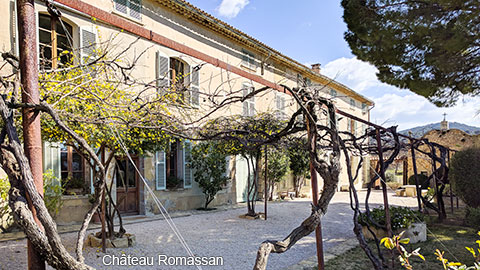
- OttDomaines Ott is and always has been a family-owned business. The Ott family themselves are still involved, from foundation in 1912 to the present day. Since 2004 the business has been in the more than capable hands of the family behind Champagne Louis Roederer and together they have made Domaines Ott into arguably Provence`s finest and certainly most iconic rosé producer. They make intense yet very pale rosés and use only natural fertilisers, strict controls on yield and very little use of chemicals in the vineyards.
- Paul-Vincent Avril`He only makes a couple of wines, how long can this take?` In the end, Paul-Vincent Avril got a strong nomination for winemaker we would most like to spend more time with. The man is thoughtful, strong in his views and very clear in his aims. One can get a strong impression that from an early age he planned a career which led inexorably to the helm at Clos des Papes. Life is more chaotic than that of course,but his trajectory through the wine trade seemed to be an almost perfect preparation.
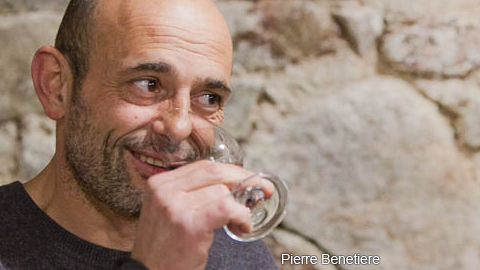
- Pierre BenetiereMarie and Pierre Benetiere are a team doing all things necessary to produce great wine from this tiny domaine. In Marie`s case, this means going out to work as an accountant full time to subsidise the investment that the couple are making in both vineyard and cuve. Pierre, a friendly and even hearty chap concentrates on making these intense and memorable wines. After trying their Condrieu a couple of years ago, we couldn`t resist the offer of more of their wines. (CW 19/03/2008)
- RemizieresRemizieres is one of those domains that has crept up on the market over the last few years. For a long time it produced understated wines, which were very dry and restrained, but under Philippe Desmeure and the eponymous Emilie of the prestige cuvee, the house style has changed. Still fruit-oriented, and still managed to produce ripe fruit but not raisins, the increased use of new oak over the last ten years or so has been a positive; a proliferation of one-off cuvees in peculiar years less so.
- Rene Rostaing
Rene Rostaing spent his working lifetime defending the idea that Côte Rôtie should taste like Côte Rôtie, not like Hermitage, and certainly not like new world Syrah – and making wines to justify the claim. The winemaking here has always been deeply rooted in local tradition, not to mention some extremely well-sited old vines. The domaine began with parcels inherited from two of the region’s greatest pioneers. Rene’s father-in-law Albert Dervieux, and his uncle Marius Gentaz-Dervieux.
- Roger SabonDidier Negron, who is married to a Sabon daughter, is now the hands-on force here, with a lot of input from the affable Jean-Jacques - the latter a man with a striking resemblance to Sven Goran, save for his team`s over performance and a lack of Stelvin. Screw or no screw however, this is a forward looking estate with a wholehearted embrace of modern technology where appropriate. These wines are lovely, with depth, complexity and finesse. They show many flavours and age extremely well.
- Tempier
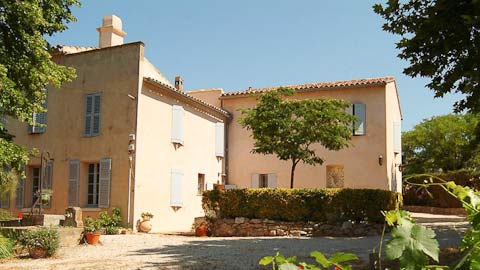
Down in Provence, between Marseille and Toulon, set in a landscape of scrub and pine forest about 4 miles from the coast, you`ll find Domaine Tempier. Mourvedre is king down here. Once upon a time vignerons were ripping it out to make way for higher-yielding varieties, but in the late 1930s Lucien Peyraud at Domaine Tempier led the fightback; the establishment of the Mourvedre-based Bandol AOC that tags Tempier bottles is mainly down to his efforts.
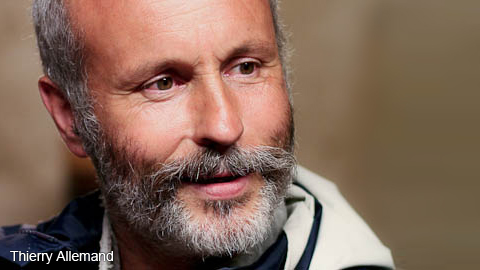
- Thierry AllemandSolid granite is the matter which makes up these vineyards and, it seems, the wines they produce. Thierry Allemand is a brilliant but complicated man who towers over others in the appellation not just in height but in quality. He is well known for operating a low or no sulphur regime in his winery. Syrah doesn`t need as much as some people give it anyway, and he takes advantage of this. In the days - a brief 30 or 40 years ago - when the Rhone was in the same sort of trouble that much of the Languedoc is now, Cornas was the most vulnerable AOC.