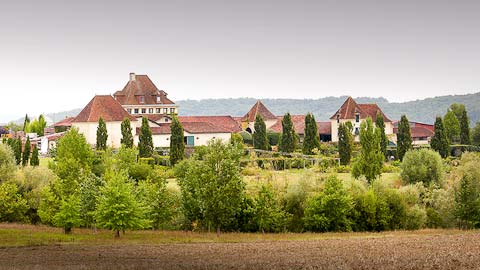
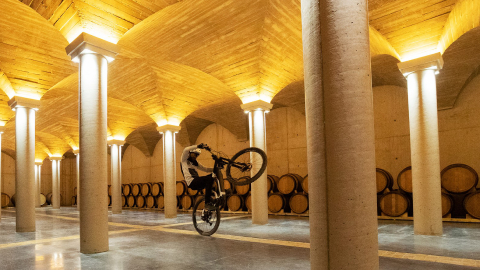
Undoubtedly the finest maker of Tannat this side of Fray Bentos, Alain Brumont originally made his home at Chateau Bouscasse, where vineyards surrounded by very little nestle high in the hills. There`s certainly very little pollution for the northern hemisphere, as there is no industry within 100 kilometres in any direction. With their exposed position the vines get up to fifteen hours a day of sunshine. Cultivation is pretty much chemical free and low yield, while in the winery things go slow.
Rhone/southern France
Rhone/southern France
When driving south through France it always feels that as one reaches Lyon it should become hot and sunny – somewhat prematurely as there are still over 300 kilometers before reaching the Mediterranean. So the northern Rhone is cool, the northern limit of Syrah and that is what makes the grape perform so magically here, triumph through struggle. And it is a struggle, much of the good or great wine is grown on precipitous hillsides, steeply and narrowly terraced and useless as a workplace for those with vertigo. Viognier, the north’s most high maintenance grape variety is grown in similar conditions and the combination of hillside, river and the beginnings of mistral are essential to quality. Marsanne and Roussanne are other white wine vines found in this area where in fact white wine used to dominate. Côte Rôti, Condrieu, St-Joseph, Hermitage, Crozes, Cornas and St-Peray make up the north.
In the south, after a bit of a gap in the vines and some majestic wind turbines cunningly sited along the autoroute the southern Rhone begins. Supplementary: which two types of confectionary are produced in the Rhone valley? In the south we are much nearer the Med and Grenache takes over from Syrah as dominant red. Villages like Sablet, Rasteau, Gigondas and Chateauneuf-du-Pape all make hedonistic wines of varying quality and style. Picking the best and most interesting and delicious is our job.
The south also gives us lipsmacking rosés from Tavel and Lirac. Travelling south and west from the plateau of Chateauneuf brings us to first Languedoc and then Roussillon, two regions lumped together yet of very different character. The former displays a split personality with many growers of the old school lost and angry as they fail to adapt to the loss of subsidies and the arrival of the market. On the other hand there are contemporary growers, entrepreneurial and energetic and often incomers, though plenty of natives are enthused by their vineyards' potential too. Their's is a green and pleasant land. Roussillon is rockier, more austere, a Catalan land of fortified houses and fortified wines on a bleaker, more imposing landscape.
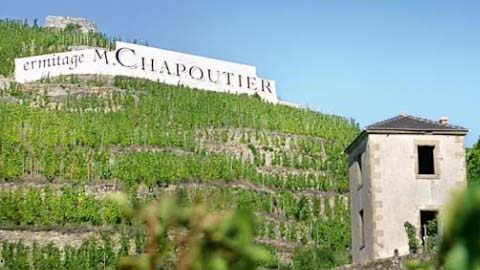
- ChapoutierOne of the worlds top producers and growers, with 175 acres of vines in 5 different Rhone Valley appellations. `In 1989, I knew how to make noise...Now I know how to make music,` says Michel Chapoutier of his style when he took over from his father Max in 1989. Immediately converting to biodynamics, of this transformation, Robert Parker says, `I have never witnessed a more significant jump in quality and change in winemaking philosophy than what occurred in the Chapoutier cellars`.
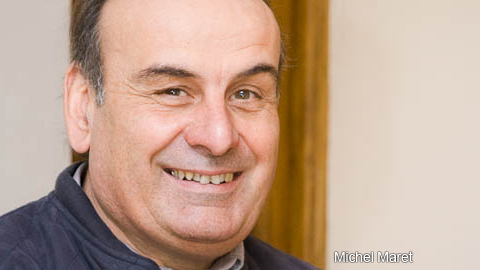
- CharbonniereMme Maret was, as ever, determined to put the world to rights. Subjects discussed were. Czech and Polish lorry drivers (and a lack of Polish plumbers because they`ve all become lorry drivers); the EU (the amount of construction going on in Spain, Portugal and Ireland); Margaret Thatcher; the importance of English. Good job the wines speak for themselves or they wouldn`t get a word in edgeways. Michel Maret appears very shy and tries to thrust his daughter forwards for the photographs; perhaps it is just that he has learned that, naturally, women are in charge.
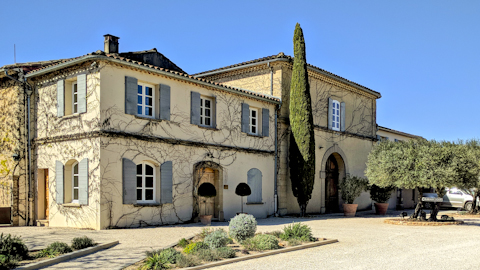
- Chateau de BeaucastelAlthough the first record of vines on the property dates back to the mid sixteenth century, it has only been owned by the Perrin family for fewer than 100 years. The family have increased their holdings over the years, partly purchasing and partly leasing land that they cultivate. Since 1964 no pesticides or artificial fertilisers have been used on the vineyards and ploughing is used to control both weeds and vine vigour. Some aspects of organic and biodynamic regimens are followed but the family is not interested in certification.
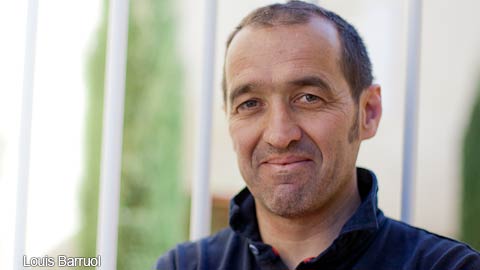
- Chateau de Saint CosmeThe most tightly wound bundle of irrepressible energy encountered on the trip, Louis Barruol could probably power a small village on his own. Where Thierry Faraval is somewhat reticent, Louis is forceful; even his spit is short, direct and accurate. Opening a bottle is a brutal, focussed attack and nothing is put down when it can be slammed. Some might find him arrogant, but here is a man sure of his mission on earth and equipped to fulfil it.
- Chateau PesquieChateau Pesquie is owned by the Chaudiere family, and for the last fifty years the family have strived to produce terroir expressive wines from their vineyards in Ventoux. Since 2003; brothers Alexandre and Frederic have held the reins and over the first decade of their control, have gradually made the transition to organic farming, seeing their first few parcels certified in 2007. Now, however, they tend to the entire vineyard biodynamically.
- Domaine du Pegau
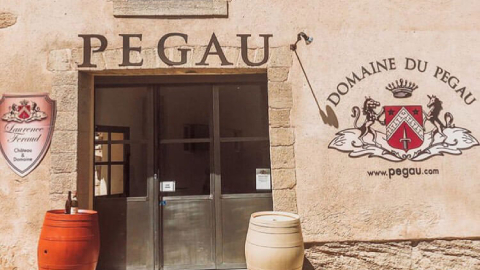
Laurence Feraud doesn’t like to be hurried, and neither, she argues, does her wine; her Chateauneuf-du-Pape is released a year later than at most other domaines. Laurence is the irrepressible force of nature behind her family’s wines. The Feraud family have been involved in winemaking since the 17th century, but it was only when Laurence returned from wine school in 1987 that she convinced her parents to constitute Domaine de Pegau. Under her stewardship, Pegau has taken its place in the top tier of Chateauneuf estates.
- Domaine Giraud
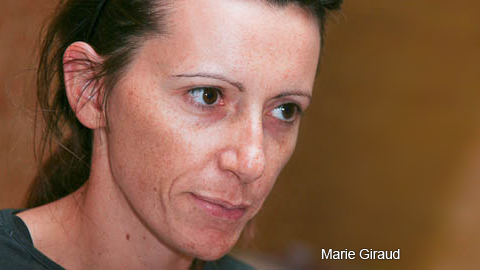
The face of the domaine as far as Uncorked is concerned is the indomitable Marie Giraud, who has lost count of the number of generations, or even centuries that her family has owned it. Beginning to take over in 1998, the current generation already has several notable firsts for the family to its name. Marie and her brother Francois were the first to bottle their own wine rather than sell it in tanker lots and were the first to take it organic. They began conversion in 2008 and achieved full status in 2011, which is therefore their first fully organic vintage.
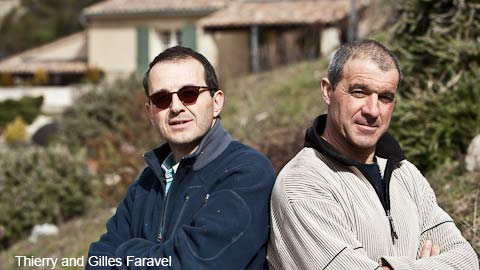
- Domaine La BouissiereWe`d banged on the cellar door only ten minutes late for our appointment but whether it was the howling mistral so he couldn`t hear us, or he just wasn`t there, we didn`t know. Disappointed, we left for our next appointment, back down the hill at Saint Cosme - only for Thierry to call. Precise and calculated in all he does, it seems, he doesn`t appear to share the Provencal aptitude for tardiness. When we returned, he didn`t seem to resent us for it- as last year, he took us meticulously through the intricacies of the vintage - careful not to omit the slightest detail.
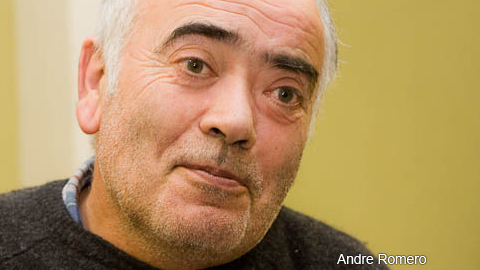
- Domaine la SoumadeA visit to the People`s Palace which is Andre Romero`s Headquarters is always entertaining. Andre the hospitable was out buying our lunch when we arrived and so we were left to rootle about in the cellar for a bit. Then Frederic, Andre`s son, started us on the tasting. The wines had just been sulphured prior to the bottling four weeks later and were still full of carbonic gas - so could have been forgiven for showing less well than they did. Resplendent as ever in his AC Rasteau track suit the man himself appeared lugging a car full of carrier bags.
- Domaine Saint PrefertFormerly a banker, Isabel Ferrando gave up her career to buy St Prefert in 2002. After the harvest rains that year, she must have felt like one of the 12 year olds who manage my pension. Since then flood has turned to drought and her subsequent vintages have been superb. Her wines have come to our notice partly because of the domaine`s vines. Old as is common, but 40% Mourvedre, which is distinctly uncommon. They have a gamey quality imparted by that Mourvedre and are seriously structured, too.