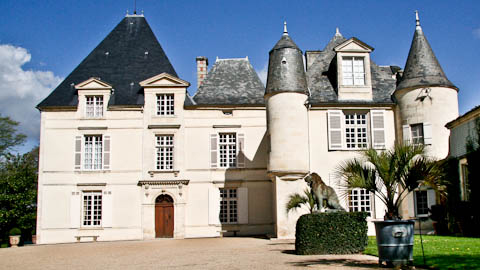
‘I drank a sort of French wine called Ho-Bryan that hath a good and most particular taste I never met with.’ The April 10th, 1663, entry in Samuel Pepys’ diary is regarded as the ever first published wine review, but it was not the entry of this wine into the English consciousness. Haut-Brion had already been served to King Charles II three years earlier, on his restoration to the throne. In fact, Haut-Brion is surely the most storied historical property in all of Bordeaux. There were probably vines here in Roman times, and monks certainly planted them in the 16th century, but it wasn’t until the 17th century that one Jean de Pontac created Haut-Brion in something approaching its modern form. (His brother-in-law Arnaud de Lestonnac did the same thing with neighbouring La Mission Haut-Brion, and the two properties have run on parallel tracks ever since). But the most significant thing of all about Haut-Brion is that it became the first chateau to produce truly age-worthy wine, by such modern quality innovations we now take for granted as longer ageing in barrel and keeping barrels topped up to prevent oxidation.
In 1855, Haut-Brion was so celebrated that it was listed as a First Growth in the classification of the Medoc, despite being from the Graves rather than the Medoc. Eighty years later, in 1935, New York financier Clarence Dillon bought Haut-Brion, and to this day Haut-Brion sits in the holding company of Domaine Clarence Dillon, which is managed by Prince Robert of Luxembourg, a great-grandson of Clarence Dillon. Winemaking also runs in the family here, with Jean-Philippe Delmas the third generation of his family to manage the wine and the estate. In 1983, Domaine Clarence Dillon acquired La Mission Haut-Brion, and ever since the two properties have been managed in parallel.
The Bordeaux suburbs have expanded to the chateau borders, and benefitting from the warmth of the nearby city, Haut-Brion is often among the first Pessac estates to pick. The vineyards are planted to 45.4% Merlot, 43.9% Cabernet Sauvignon, 9.7% Cabernet Franc and 1% Petit Verdot. (A slightly higher proportion of Merlot is not unusual in Pessac). Part of the secret of the wine’s complexity is the array of terroir, from deep gravel banks to limestone to heavy beds of clay (where the Merlot is planted).
Haut-Brion Blanc is also one of the world’s great white wines, rich and electric at the same time. Three hectares of vineyard are planted to planted to white grapes (as opposed to fifty hectares for red varieties), with the white blend approximately equal amounts of Semillon and Sauvignon Blanc. There is also some Sauvignon Gris in the vineyard, which goes La Clarte de Haut-Brion, a joint second white wine for Haut-Brion and La Mission Haut-Brion. (NT 14/04/26)


