New Zealand
New Zealand
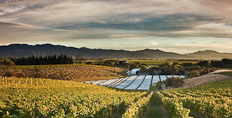
Friends who have visited recently tell me that this small nation has dragged itself out of the 1950s. Certainly in wine world terms it is growing up fast and new areas and experimental grape varieties have almost all turned out to be considerable successes. They do need to expand the number of countries to which they sell, being dangerously reliant on us, fickle lot that we are.
- South IslandThe unlikely wine region has become the island`s most famous as Marlborough now dominates New Zealand`s and certainly the South Island`s profile. Originally orchard and sheep territory, but then where isn`t, it was only in 1973 that Montana first planted vines on the South Island, previously considered far too cold. In fact, Marlborough is plagued by spring and autumn frosts that threaten the crop annually and without the training systems developed by Dr Richard Smart it is unlikely that Marlborough would have become New Zealand`s biggest and most productive wine region. Growing spread further south still with Central Otago first planted in the mid eighties. Sauvignon Blanc dominates output with Pinot Noir for both still and sparkling wines. Chardonnay and Riesling are also significant. Growers in the south are also working hard with Pinot Gris and Gruner Veltliner. They have had critical success with both and now just need consumer appreciation. (CW 23/01/12)
- North IslandThe origins of the New Zealand wine industry were in the North Island with lots of input from German settlers, which meant Muller-Thurgau and Riesling aplenty. Most of this was packaged in bulk with bag in box the majority unit of sale for years. Now things have changed and in replanting to combat a wave of phylloxera, there is more Chardonnay, Cabernet and Merlot as well as Syrah and Viognier. As the understanding of the island`s terroirs progresses we should have many more and varied quality wines appearing. (CW 23/01/12)